Could a well-meant wipe-down put a platform lift at risk? If you’re unsure how to clean a platform lift without letting moisture or cleaning products reach sensitive components, caution is sensible. Accessible surfaces need regular care, but controls and mechanisms call for a more careful approach.
Keep routine cleaning straightforward: follow the manufacturer’s instructions, use suitable supplies and clean only surfaces you can safely reach. This guide explains how to prepare the lift, clean approved surfaces and avoid common mistakes, such as spraying cleaner directly onto the equipment. It also explains where everyday cleaning ends and technical maintenance begins.
If you notice damage, unusual operation or another sign that cleaning should stop, don’t try to fix the lift yourself. Take it out of use if you’re concerned about safety and arrange for a technician to assess it. A simple, repeatable routine helps you care for accessible surfaces while keeping safety front of mind.
Key Takeaways
- Clean approved, accessible surfaces, not internal mechanisms or components that need technical maintenance.
- Use the lift’s instructions to guide preparation, including any steps for stopping the lift or managing access.
- Choose a routine based on the lift’s setting, use and visible dirt, while following its surface-care instructions.
- Stop if you notice unusual movement, sounds, damage or exposed electrical components.
- If you’re concerned about safety, keep people clear and have a technician assess the lift rather than attempting a repair.
How to Clean a Platform Lift: What Routine Cleaning Does, and Does Not, Cover
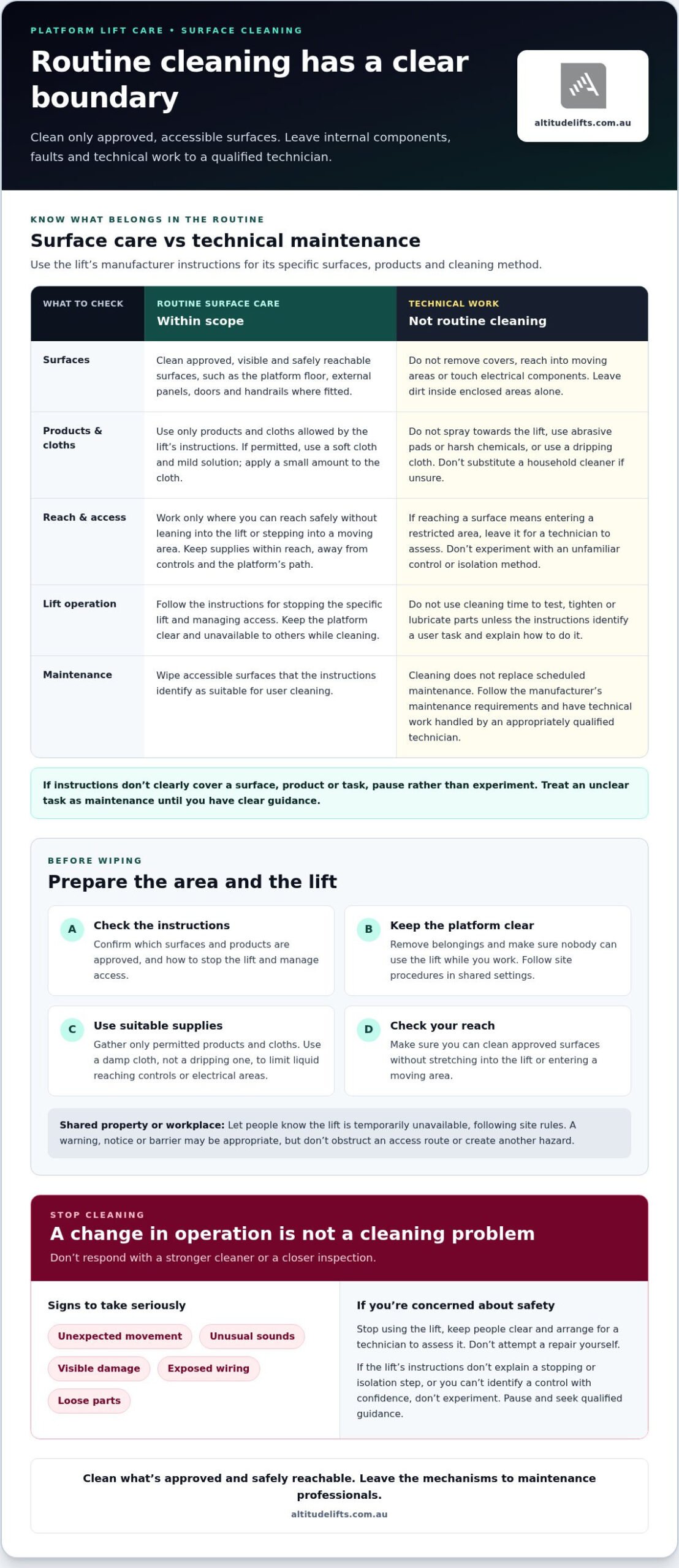
Routine cleaning means caring for surfaces you can see and safely reach, not servicing the lift. Keeping that boundary clear helps you maintain a clean platform without disturbing parts that need technical attention. The right approach to how to clean a platform lift depends on its design and the instructions for that model.
Platform lifts come in different forms and may be used in homes or small commercial spaces. A wheelchair lift is a broad category of equipment, so a general overview can’t tell you which products or methods suit your particular lift. Follow its manufacturer’s instructions.
Which parts of a platform lift can you clean?
Routine cleaning may include accessible surfaces such as the platform floor, external panels, doors and handrails, where fitted. These are the areas where dust, marks and tracked-in dirt can collect. Clean only surfaces the lift’s instructions identify as suitable for user cleaning, and follow any limits on products or methods.
Materials and finishes vary, so don’t assume a cleaner that works on one lift is suitable for another. If the instructions don’t clearly cover a surface or cleaning agent, pause rather than experiment. Visible dirt may call for cleaning; a loose part, new sound or change in movement does not. Those signs may indicate a fault, not a cleaning problem.
What should routine cleaning never replace?
Wiping an accessible panel is different from inspecting, adjusting or repairing the mechanism. Don’t remove covers, reach into moving areas or touch electrical components. These tasks go beyond surface care and could expose you to hazards or interfere with the lift. If you see dirt inside an enclosed area, leave it alone and seek technical guidance.
Cleaning also doesn’t replace scheduled maintenance. A lift may look tidy while still needing attention to its operating components. Follow the manufacturer’s maintenance requirements and have technical work handled by an appropriately qualified technician. Don’t use cleaning time to test, tighten or lubricate parts unless the instructions identify a user task and explain how to do it.
Separate what you can see from what the lift is doing. Dust on an approved surface may be suitable for routine cleaning. Unexpected movement, unusual noise, visible damage or exposed wiring calls for a different response, not a stronger cleaner or closer inspection. If you’re concerned about safety, stop using the lift, keep others away and arrange for a technician to assess it.
In short, clean only approved, accessible surfaces and leave internal or technical work to maintenance professionals. If you’re unsure whether a task counts as cleaning or maintenance, treat it as maintenance until you have clear guidance.
Prepare to Clean a Platform Lift Safely
A few checks before you begin can prevent a wipe-down from becoming a safety or equipment issue. Don’t assume every lift needs the same power-off routine. Models differ, so check the instructions for your lift to confirm which cleaning is permitted, how to stop it and whether access-control steps apply.
Use this checklist before starting:
- Read the lift’s user instructions. Check which surfaces and cleaning products are approved, and follow the directions for stopping the lift and managing access.
- Plan around other users. At a shared property or workplace, choose a time when the platform can be kept clear and unavailable to others during cleaning.
- Gather suitable supplies. Use a soft cloth and mild cleaning solution only if the lift’s instructions allow them.
- Check the work area. Make sure you can reach approved surfaces without leaning into the lift or stepping into a moving area.
Gather suitable cleaning supplies
Use only products and cloths permitted by the lift’s instructions. If a mild solution is allowed, apply a small amount to the cloth rather than spraying towards the lift. Abrasive pads can scratch finishes, and harsh chemicals may discolour or damage surfaces. Excess liquid can run towards controls or electrical areas, so use a damp cloth, not a dripping one. Don’t substitute a familiar household cleaner if you’re unsure it’s suitable.
Keep supplies within easy reach, but outside the platform’s path and away from controls. This avoids stretching or repositioning yourself while cleaning. If you can’t reach a surface safely without entering a restricted area, leave it for a technician to assess.
Make the work area safe before wiping
Remove belongings from the platform and make sure nobody can use the lift while you work. In a shared setting, follow the property’s procedures for letting people know the lift is temporarily unavailable. A verbal warning, notice or barrier may be appropriate under site rules, but don’t obstruct an access route or create another hazard.
Follow the instructions for stopping or isolating your specific lift. Don’t assume every model has the same switch or isolation method. If the instructions don’t explain what to do, or you can’t identify a control with confidence, don’t experiment. Pause and seek guidance from someone qualified to advise on that equipment.
At a workplace or shared property, follow the site’s safety procedures and current WorkSafe WA guidance when planning the task. These can help clarify how to manage access and communicate temporary restrictions. Don’t begin if you can’t keep the area safe for other users.
Safe preparation means confirming the permitted method, having suitable supplies ready and keeping others clear. If you’re unsure about the lift or its instructions, Altitude Lifts’ platform lift guidance can help you understand the equipment before you proceed.
How to Clean a Platform Lift: A Step-by-Step Surface Routine
Start only when the lift is safe to access under its instructions and the platform is clear. Keep the instructions nearby as you work. They take priority over any general routine, particularly if they limit which surfaces you can clean or specify a particular method. The steps below cover accessible surfaces only, not internal parts or servicing.
- Check the area before touching the lift. Confirm it’s stopped as directed and that other people can’t use it while you clean. Look over accessible surfaces first. If you notice damage, unexpected moisture or anything that appears loose, stop rather than wiping around it.
- Remove loose dust gently. If the instructions permit, use a clean, soft, dry cloth to lift dust and loose particles from the platform and accessible panels. Don’t scrub grit across the surface, as it may scratch. Avoid pushing dirt towards openings, gaps or moving parts.
- Wipe the platform surface. Use the method approved for your lift. If a lightly damp cloth and cleaning solution are permitted, wring the cloth out so it isn’t dripping, then gently wipe the accessible platform surface. Work in manageable areas, turning the cloth to a clean section as it picks up dirt.
- Clean accessible panels and doors. Wipe external panels and door surfaces only if the manufacturer’s instructions allow it. Use gentle strokes and keep the cloth away from seams or openings where liquid could run inside. Don’t reach beneath the platform, into gaps or near exposed mechanisms, even if you can see dust or debris there.
- Wipe touchpoints with care. Handrails, where fitted, can be cleaned using the approved method. Treat buttons and controls cautiously: never spray product directly onto them. If cleaning is permitted, apply the solution to a cloth and wipe lightly. Don’t press the controls, wet their edges or allow liquid to collect around them.
- Dry and review the surfaces. Use a clean, dry cloth if the instructions permit, and check that cleaned areas are dry. Look around controls and openings for visible moisture without probing or dismantling anything. Remove cloths and supplies from the platform, then make sure the surface is clear and safe before the lift returns to use.
There’s no need to force a mark away. If it remains after the approved cleaning method, don’t reach for a stronger product or abrasive tool. Stop if liquid has entered an opening or you notice a change in the lift’s movement or sound. These situations are outside routine surface cleaning and need appropriate assessment.
This sequence makes it easier to clean a platform lift consistently without crossing into maintenance. Clean only what the instructions permit, control the amount of moisture and leave anything beyond an accessible surface untouched.
Choose a Cleaning Routine for Your Platform Lift’s Setting
The right routine depends on what the lift is exposed to and how people use it. An indoor lift in a quiet home may collect household dust and dirt carried in on shoes. A lift in a busy shared area may have more visible soil and frequent contact with handrails or controls. In Western Australia, outdoor conditions may also make dust or coastal exposure relevant. Let the lift’s surface-care instructions guide what you clean and how.
Indoor, outdoor and shared platform lifts
For an indoor lift, notice where dirt tends to gather. A platform near an entrance may pick up tracked-in grit, while a lift used by several people may need more attention to accessible touchpoints. Clean only the areas and materials covered by the manufacturer’s instructions. Don’t assume indoor surfaces all tolerate the same products.
Outdoor exposure can change what you notice between cleans. Dust or visible residue may build up differently depending on the lift’s location, including near the coast. Follow the lift’s surface-care guidance rather than adding a cover, applying a treatment or cleaning a mechanism unless the instructions specifically direct you to do so.
At a workplace or shared property, coordinate cleaning with people who rely on the lift. Choose a suitable time, follow site procedures for temporarily restricting access and avoid leaving the platform unavailable longer than necessary. The vertical platform lifts buying guide provides context on lift types, which can help explain why care instructions are specific to the equipment.
How often should a platform lift be cleaned?
There isn’t one useful interval for every lift. Base routine cleaning on the owner’s instructions, how often the lift is used and whether dirt is visible on approved surfaces. A lightly used indoor lift may need a different approach from a shared lift in steady use. Clean in response to the condition of accessible surfaces rather than following an arbitrary routine.
Where use is frequent, pay attention to touchpoints as part of your regular visual check. That doesn’t mean applying disinfectant or cleaning products more often without considering the lift’s instructions. If a surface becomes soiled, use an approved method. If what you see looks like damage or a fault rather than dirt, stop and arrange a technical assessment instead of treating it as a cleaning task.
A simple log can help keep shared-site care consistent without imposing a fixed schedule. Record:
- The date of the check or clean.
- The visible condition, such as dust, tracked-in dirt or residue.
- Any concern noticed, including damage or a change in operation.
Use the log to spot recurring patterns and pass concerns to the person responsible for the lift. If you’re planning for a particular site or use, explore Altitude Lifts’ platform lift guidance as part of choosing equipment for your setting.
When to Stop Cleaning and Get Platform Lift Guidance
Stop if something about the lift seems unsafe or unfamiliar. Cleaning is limited to accessible surfaces; it isn’t a way to investigate a fault. If you’re unsure whether a mark is dirt or damage, pause and leave the area alone. A technician can assess concerns that routine cleaning can’t resolve.
Signs that surface cleaning is no longer the right next step
Stop if you notice damage, a change in how the lift moves, unusual sounds or a component that appears exposed. Also stop if liquid has reached an opening or control, or if a surface seems loose. Don’t wipe, test or reach closer to find out what’s happening. These signs call for caution, not a different cleaning product.
If there’s a safety concern, keep people clear and follow the lift’s operating instructions. Don’t restart the lift, dismantle it, adjust a part or apply lubricant unless its instructions explicitly direct you to do so. Don’t use the controls to test whether the issue has gone away. If you can’t tell whether the lift is safe to use, leave it out of use until it has been assessed.
Distinguish a mark on an approved surface from a change in the lift itself. Dust on a platform may be suitable for cleaning. Grinding, hesitation, unexpected movement or visible damage isn’t. Record what you observed and when, without touching the affected area. That information can help a technician understand the concern.
Get advice suited to your lift and property
Your lift’s instructions are the reference for ongoing surface care, because cleaning methods and limits differ between models. Keep the manual accessible and refer to it before trying a product or cleaning an unfamiliar area. If the instructions don’t cover the situation, don’t guess or use cleaning as a substitute for a technical assessment.
The home lift installation guide explains considerations involved in planning a residential lift. It can help you think about how equipment fits your property, while the manufacturer’s documentation remains the reference for cleaning your particular lift.
Altitude Lifts is a locally owned Western Australian specialist in platform lift equipment, site assessment and installation. If you’re considering accessible vertical mobility for your home or small commercial space, explore platform lift solutions with Altitude Lifts. If an existing lift shows warning signs, prioritise safety and arrange for a technician to assess it rather than attempting a repair.
Make Your Next Lift Decision with Confidence
Knowing how to clean a platform lift is useful, but you may also need to consider whether the equipment suits the people and setting that rely on it. Think about the property’s access needs, everyday use and whether the care instructions are clear to the people responsible for the lift.
Altitude Lifts provides platform lift equipment, site assessment and professional installation in Western Australia. This local expertise can help you consider your property and accessibility needs when planning vertical mobility for a home or small commercial space.
Explore platform lift solutions with Altitude Lifts and discuss the right equipment for your setting. Take a considered next step towards improved access in your home or small commercial space.
Frequently Asked Questions
Can I use a pressure washer to clean a platform lift?
No. Don’t assume a pressure washer is suitable, as high-pressure water can reach controls or electrical components that should remain dry. Use only the cleaning method specified in the instructions for your lift. If they don’t mention pressure washing, leave it out rather than trying it on a small area first. Use a gentle method approved for that lift and its accessible surfaces.
Can I clean a platform lift while it is switched on?
Don’t guess whether your lift needs to be switched off or isolated before cleaning. The correct procedure depends on the equipment, so follow its user instructions and prevent use while you work. If you can’t identify the right switch or understand the stated steps, don’t experiment with controls or electrical equipment. Pause the task and get guidance specific to the lift before proceeding.
Can I use disinfectant on platform lift buttons and handrails?
Use disinfectant only if the lift’s instructions permit that product and application. A product suitable for one surface may damage another, and spraying directly onto buttons can let liquid enter the controls. Apply an approved product to a cloth as directed, use only the specified amount and dry the surface if instructed. Never mix cleaning products, as this can create harmful reactions or fumes.
Should I lubricate platform lift parts while cleaning?
No. Routine cleaning shouldn’t become an attempt to lubricate, adjust or service moving parts. Maintenance requirements depend on the lift and its documentation, so don’t apply oil or lubricant based on guesswork. The wrong product or application could affect how the equipment operates. Leave mechanical work to appropriately qualified lift professionals, and follow the manufacturer’s instructions for maintenance.
What should I do if my platform lift makes an unusual noise after cleaning?
Stop using the lift if its sound or movement has changed, and follow its operating instructions. Don’t reopen covers, reach into mechanisms or repeat the cleaning to investigate the cause. If other people use the lift, keep them clear while there’s a safety concern. Note what you heard and when it occurred, then seek professional guidance specific to the lift before returning it to use.
Does cleaning a platform lift replace professional maintenance?
No. Cleaning is for accessible surfaces; it doesn’t assess internal components, mechanisms or safety systems. Follow the maintenance schedule and procedures supplied for the particular lift, even if its visible surfaces look clean. If you can’t find the relevant documentation, don’t treat a wipe-down as a substitute for technical care. Get guidance suited to the equipment so its maintenance needs are understood and addressed appropriately.