What if your home lift consumed less electricity than the toaster or kettle you use every morning? It’s a question that surprises many Perth residents, yet in 2026, the latest energy efficient home lifts are designed to do exactly that. You might worry that installing a lift will lead to skyrocketing Synergy bills or require a costly overhaul of your Western Power connection. We understand that concern. It’s natural to feel hesitant about adding a major feature when you’re already focused on meeting the 7-star NatHERS energy mandates for your home.
You don’t have to choose between accessibility and affordability. This guide will show you how modern residential lift technology minimises power consumption while maximising your home’s resale value and long-term sustainability. We’ll break down the differences between drive systems, explain how your lift can run effortlessly off your existing solar panels, and show you why a smart, battery-backed system is the most reliable choice for Western Australia’s unique climate. By the end, you’ll see how the right mobility solution becomes a sustainable asset rather than a utility burden.
Key Takeaways
- Understand how Machine Room-Less (MRL) technology and Variable Frequency Drives allow your lift to operate on a standard household power circuit.
- Compare the high-draw demands of traditional hydraulic systems against the energy-sipping profile of modern electric traction alternatives.
- Learn how choosing energy efficient home lifts helps your property comply with WA’s 7-star NatHERS building standards while boosting resale value.
- Identify the smart standby modes and automated cabin features that can reduce idle energy consumption by up to 75%.
- Discover how to future-proof your Perth home by selecting mobility solutions that integrate seamlessly with rooftop solar and battery storage.
Why Energy Efficiency is the New Standard for Perth Home Lifts
In Western Australia, the way we think about vertical mobility has changed. For years, a home lift was seen as a luxury item with industrial power requirements, often demanding complex three-phase wiring and massive structural changes. Today, energy efficient home lifts are viewed as essential household appliances. Efficiency in this context means more than just a low electricity bill; it’s about a system’s ability to integrate with your home’s total energy budget without triggering expensive upgrades to your Western Power connection.
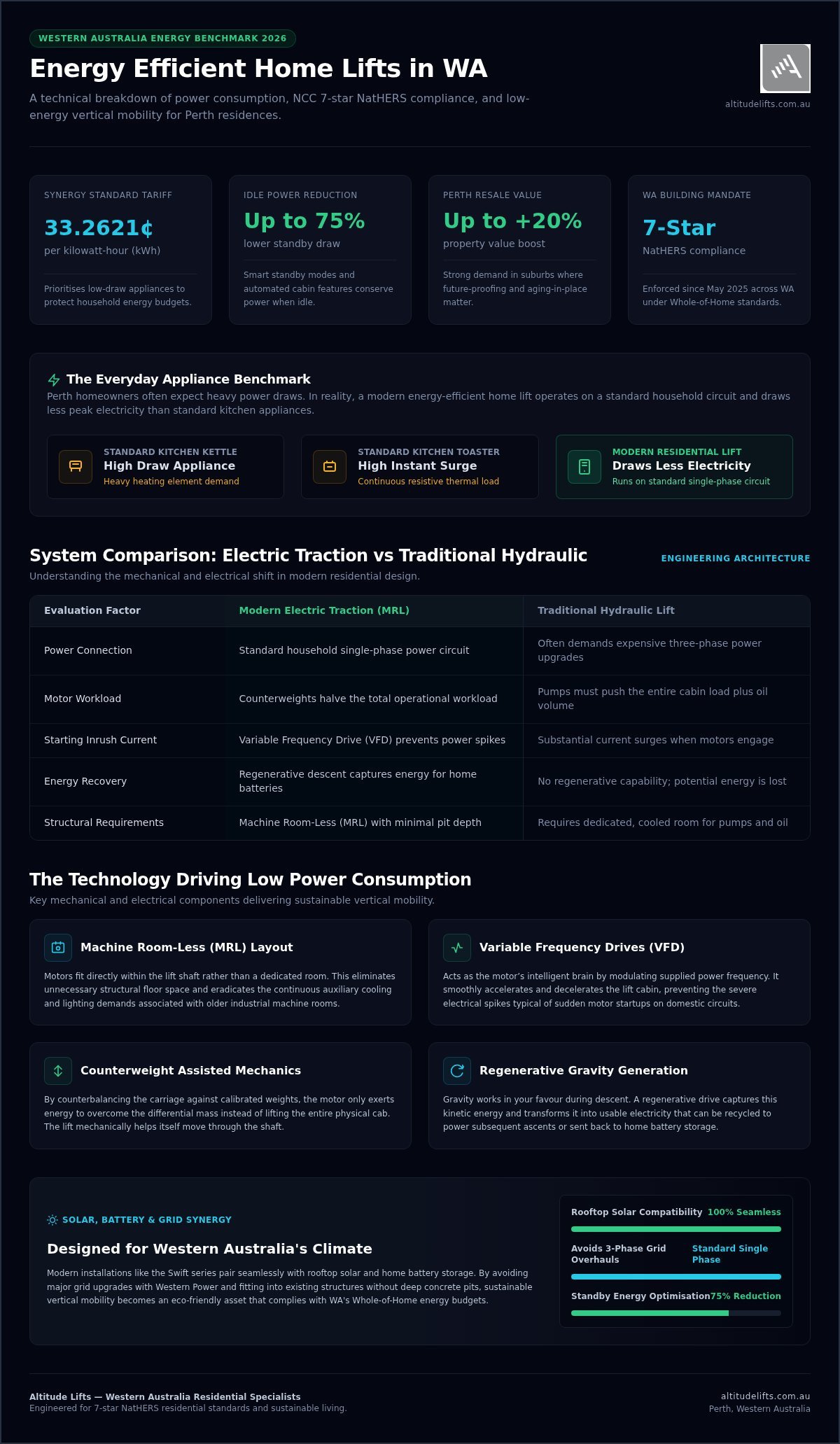
Perth homeowners are increasingly prioritising low-draw technology as electricity costs rise. With the standard Synergy residential tariff now at 33.2621 cents per kWh, every watt counts. We’ve seen a decisive move away from heavy industrial setups toward smart residential systems that draw less power than a standard toaster. This shift is driven by a desire for independence from the grid and a need for equipment that works harmoniously with rooftop solar systems.
The Rise of Eco-Conscious Home Design in WA
Western Australia’s adoption of the NCC 7-star NatHERS mandate in May 2025 has transformed how we build. Architects now have to account for every fixed appliance within a “Whole-of-Home” energy budget. Choosing a compact, low-energy lift helps builders meet these strict requirements without sacrificing accessibility. Modern trends favour smaller, smarter lifts that require minimal pit depth, reducing the volume of concrete and construction waste. It’s a logical progression where technical innovation meets practical necessity.
Reducing the Carbon Footprint of Your Multi-Story Home
Sustainability is no longer a buzzword; it’s a financial strategy. Installing energy efficient home lifts can increase a Perth property’s resale value by up to 20 per cent, particularly in suburbs where aging-in-place is a priority. To achieve this, it’s vital to understand the fundamental hydraulic and electric traction elevator mechanics that dictate performance. While older hydraulic models rely on pumps and oil, modern electric traction systems use counterweights to halve the motor’s workload.
Operational energy is only half the story. By choosing a locally owned specialist like Altitude Lifts, you’re supporting a business that understands WA’s specific grid requirements and prioritises retrofitting within existing structures. This approach reduces the need for energy-heavy major renovations. When you pair high-quality hardware like the Swift series with local expertise, you ensure your home remains a sustainable, high-value asset for decades to come.
The Technology Behind Low-Energy Residential Elevators
Understanding how energy efficient home lifts actually work requires a look under the hood at the mechanics of modern vertical mobility. The most significant leap in recent years is Machine Room-Less (MRL) technology. By housing the motor directly within the lift shaft, manufacturers eliminate the need for a dedicated, temperature-controlled room. This doesn’t just save floor space; it reduces the energy required for auxiliary cooling and lighting that older systems demanded. When paired with Variable Frequency Drives (VFD), the system gains a sophisticated brain. VFDs manage the motor’s speed by adjusting the frequency of the power supplied, which prevents the massive power spikes traditionally seen when a lift starts or stops.
Modern counterweight systems further assist this efficiency. By balancing the weight of the cabin against a set of weights, the motor only needs to move the difference in mass rather than the entire load. This mechanical advantage means the lift is essentially helping itself move. Regenerative drives are systems that capture energy during descent to power the next ascent.
Regenerative Drive Systems: Powering the Future
In 2026, high-end residential lifts are no longer just energy consumers; they are energy recyclers. When a lift travels downwards, gravity does the heavy lifting. A regenerative drive converts this kinetic energy back into electricity, which can be fed into your home’s battery storage or used by other appliances. This aligns perfectly with the Australian Government guide to sustainable household energy, which emphasises the importance of smart appliance integration. This science of gravity-assisted generation has become a benchmark for any premium installation in Perth today.
Motor Innovation and Friction Reduction
The transition from heavy, oil-dependent hydraulic systems to clean electric power is nearly complete. Gearless traction motors are at the heart of this movement. These motors use permanent magnets to provide high torque without the energy losses associated with traditional gearboxes. Friction is the enemy of efficiency. Modern rail designs and high-performance lubricants ensure that every movement is as smooth as possible, requiring minimal wattage to overcome resistance.
If you are planning a renovation or building a multi-story home, it is worth looking at how these technical advancements fit your floor plan. You can explore our range of compact models to see how gearless technology enables smaller footprints without compromising on performance. These innovations ensure your home remains accessible without placing an unnecessary burden on the power grid or your wallet.
Hydraulic vs. Electric Traction: Which Lift Wins the Efficiency Race?
When choosing between energy efficient home lifts, the drive system is the most critical decision you’ll make. Historically, hydraulic lifts were the standard for residential use. They work by pumping oil into a cylinder to push the cabin up. However, this process requires a massive surge of power at start-up, often drawing between 2.2 kW and 4.5 kW. This sudden demand can strain a standard domestic circuit and often conflicts with the steady output of home solar systems. It’s a heavy-handed approach that feels increasingly out of place in a modern, energy-conscious household.
Electric traction systems offer a more refined alternative for modern Perth homes. By using a counterweight to balance the cabin, these lifts reduce active motor demand by 40 to 50 per cent compared to hydraulic counterparts. This is why the Swift series and other small footprint home lifts almost exclusively favour electric technology. They provide a smoother ride while sipping electricity rather than gulping it during every ascent. You get the same vertical mobility with a fraction of the grid impact.
The Maintenance and Environmental Cost of Hydraulics
Beyond the power bill, hydraulic systems carry hidden environmental risks. The reliance on oil-based fluids means there is always a potential for leaks, which can damage sub-floors and cause persistent odours. In the context of a sustainable home, disposing of degraded hydraulic fluid is a significant challenge. Many WA residents are moving away from hydraulic retrofits because these systems often require fluid heating to maintain consistent performance during cooler Perth nights. This adds an extra layer of unnecessary energy consumption that most homeowners simply don’t want to manage.
Traction Lifts: Silent, Smooth, and Sustainable
Traction technology has evolved to tackle the issue of the ‘Phantom Load’. According to an ACEEE report on advancing elevator energy efficiency, standby power can account for up to 80 per cent of a lift’s annual electricity draw if not managed correctly. Modern traction motors use advanced controllers to drop into deep sleep modes when idle, pulling as little as 10 to 15 Watts. This efficiency allows slimline home lifts to fit into tight footprints without needing a separate, energy-hungry machine room. The result is a silent, space-saving solution that respects both your floor plan and your commitment to a lower carbon footprint.
Key Features to Seek in an Eco-Friendly Home Lift
When comparing energy efficient home lifts, it is easy to focus solely on the motor. However, the true efficiency of a system is often found in the smaller, smarter features that manage consumption 24 hours a day. Modern residential lifts in 2026 are designed to be as intuitive as any other smart appliance in your home. They don’t just move you between floors; they actively monitor their own power usage and adjust their behaviour to suit your lifestyle and your home’s energy profile.
The interior of the cabin should also reflect this commitment to sustainability. Seek out models that utilise high-efficiency LED lighting and auto-dimming features. These systems ensure that the cabin remains bright and welcoming when in use, but immediately dim or switch off once the doors close and the lift is idle. Similarly, low-energy control panels and touchscreens should be standard. These interfaces provide clear navigation and energy monitoring without becoming a constant drain on your power supply.
The Importance of Smart Standby Technology
Idle energy consumption matters more than you might think. Because a lift spends the vast majority of its life waiting to be used, a high standby draw can quietly inflate your electricity bill. High-end 2026 models enter a ‘deep sleep’ mode during periods of inactivity. This state deactivates non-essential components like ventilation fans and cabin displays. In this mode, the standby draw of a modern lift is often less than 15 Watts. To put that in perspective, it is roughly equivalent to the clock on your microwave or a kettle sitting on its base, ensuring your vertical mobility doesn’t come with a hidden “phantom load” cost.
Solar Synergy: Lifts and WA Sunshine
In Western Australia, our high rates of solar adoption provide a unique opportunity for homeowners. Connecting your lift to a residential solar battery system allows you to power your travel using the sun’s energy. Smart lifts can be programmed to optimise charging cycles during daytime energy peaks, typically between 9:00 AM and 3:00 PM when solar production is at its highest. This makes the lift a manageable load for off-grid homes or those looking to avoid Synergy’s peak evening rates. By integrating with home automation systems, you can even track exactly how much solar energy your lift is consuming in real-time.
Choosing a lift that fits your environmental goals requires a partner who understands the local WA energy landscape. You can request a consultation for a solar-ready home lift from our team to see how these features work in practice. By prioritising these smart additions, you ensure your home remains accessible, modern, and remarkably cheap to run.
Future-Proofing Your WA Home with Altitude Lifts
At Altitude Lifts, our commitment to sustainable vertical mobility is more than a technical goal; it’s a promise to our local community. We recognise that adding a lift to your home is a significant decision that impacts your lifestyle and your environmental footprint for decades. Choosing the right model among energy efficient home lifts involves a careful balance of your home’s layout and your environmental ambitions. As a locally owned and operated Western Australian specialist, we don’t just provide equipment. We provide a partnership that ensures your investment remains a low-draw, high-value asset that respects the unique energy landscape of Perth.
Partnering with a home lift installation Perth specialist ensures you receive guidance that is grounded in local reality. From the double-brick constructions of the western suburbs to the modern, solar-heavy builds in the north, we understand how to integrate vertical mobility without compromising your home’s thermal performance or energy budget. Our focus on the Swift series highlights our dedication to low-footprint design, ensuring you can plan for long-term accessibility while staying true to your environmental values.
Expert Consultation for Energy-Efficient Upgrades
Every home has a different electrical profile. During our consultation process, we carefully assess your home’s current electrical capacity to ensure your new lift won’t require expensive switchboard overhauls or three-phase power upgrades. We specialise in customising the Compact Elegance Home Lift Perth residents trust for its efficiency and sleek design. As an NDIS registered provider, we also help families navigate the specific requirements for mobility solutions, ensuring that any funded modifications meet both accessibility standards and the latest energy-saving benchmarks.
The Altitude Advantage: Local Support and Sustainable Service
A lift’s efficiency is only as good as its maintenance. Regular local servicing ensures that motors remain lubricated, rails stay aligned, and software is updated to the latest energy-saving configurations. By choosing a WA-owned partner, you reduce the transport emissions associated with interstate technicians and support a business that is deeply invested in the local community. We take pride in our workmanship and our ability to retrofit lifts into existing structures, which significantly reduces material waste and the embodied carbon of your renovation project.
Taking the next step toward a more accessible and sustainable home is a straightforward process. You can book a site assessment with our team to discuss your specific needs and see how our energy efficient home lifts can be tailored to your floor plan. We’re here to help you find a solution that offers peace of mind, safety, and a minimal impact on the Western Australian power grid.
Elevating Your Home with Sustainable Innovation
Choosing a lift for your Perth home no longer means compromising on your environmental values or facing high running costs. By prioritising electric traction technology and smart standby modes, you can ensure your vertical mobility is as efficient as any other modern household appliance. These systems don’t just add convenience; they future-proof your property against rising energy prices while maintaining the 7-star NatHERS standards required in 2026. It’s a practical investment that enhances your home’s accessibility without placing a heavy burden on the local power grid.
As a WA-owned specialist and NDIS registered provider, Altitude Lifts understands the unique requirements of Western Australian homes. We focus on high-efficiency retrofitting to reduce material waste and ensure energy efficient home lifts integrate seamlessly with your existing solar setup. It’s about finding a solution that supports your lifestyle today and for the many years to come. You can start your sustainable home transformation with Altitude Lifts today and discover how simple it is to combine luxury with a lower carbon footprint. Your journey toward a more accessible, eco-friendly home is just a conversation away.
Frequently Asked Questions
How much electricity does a modern home lift actually use?
A modern residential lift typically consumes between 0.3 and 1.2 kWh of electricity per day, averaging around 1 kWh for a standard household. This is comparable to running a small household appliance like a toaster or a kettle for a few minutes. Because modern systems use counterweights and smart standby modes, they only draw significant power during the short seconds they are in motion.
Can I run my home lift entirely off my solar panels in Perth?
Yes, you can certainly power your lift using a residential solar system. Many Perth homeowners integrate their lift with a battery storage system to capture the abundant WA sunshine during the day. By timing your lift usage or battery charging during peak solar production hours, usually between 9:00 AM and 3:00 PM, you can virtually eliminate the lift’s impact on your Synergy electricity bill.
Do energy-efficient lifts require more maintenance than standard ones?
No, energy-efficient models often require less intensive maintenance than traditional hydraulic systems. Because electric traction lifts don’t rely on oil pumps or complex fluid reservoirs, you don’t have to worry about fluid degradation or potential leaks. Regular annual servicing is still essential to keep the software and safety sensors in peak condition, but the mechanical workload is significantly cleaner and more reliable for long-term use.
Is there a specific energy rating system for residential elevators in Australia?
While there isn’t a “star rating” sticker like you’d find on a fridge, energy efficient home lifts are assessed under the National Construction Code’s “Whole-of-Home” energy budget. In Western Australia, this means your lift’s annual energy consumption is calculated as part of your home’s total performance. Choosing a low-draw model helps ensure your property meets the mandatory 7-star NatHERS thermal and energy efficiency standards required for new builds.
What happens to the lift’s energy efficiency during a power outage?
During a power outage, the lift’s efficiency features remain vital for safety. Most modern systems, including the Swift series, come equipped with an Uninterruptible Power Supply (UPS) or dedicated battery backup. This allows the lift to perform an emergency descent to the nearest floor and unlock the doors. While it won’t run indefinitely without grid power, the low-energy design ensures that these safety manoeuvres draw very little from the backup batteries.
Are electric traction lifts significantly quieter than hydraulic models?
Yes, electric traction lifts are considerably quieter because they don’t use the loud pumps and valves found in hydraulic systems. The gearless motors used in 2026 models operate with a soft hum that is barely audible through a closed door. This makes them ideal for installation near bedrooms or living areas. The absence of vibrating pipes also reduces the noise that usually travels through a home’s structural framing.
Can I retrofit an energy-efficient lift into my existing two-story home?
Retrofitting is one of our specialities at Altitude Lifts. Many of our models, such as the Compact Elegance Home Lift, are designed to fit within existing structures with minimal structural changes. Because these lifts often require zero pit depth and no separate machine room, we can install them in hallways, stairwell voids, or even through cupboards. This approach reduces construction waste and ensures your home remains accessible without a major renovation.
Does the NDIS provide funding for energy-efficient mobility modifications?
The NDIS can provide funding for home modifications if they are deemed “reasonable and necessary” to support a participant’s mobility and independence. As an NDIS registered provider, we work with participants to select mobility solutions that meet these criteria. While the focus is on accessibility, choosing a low-energy model is a smart long-term strategy to ensure the ongoing running costs remain affordable for the household over the life of the lift.