
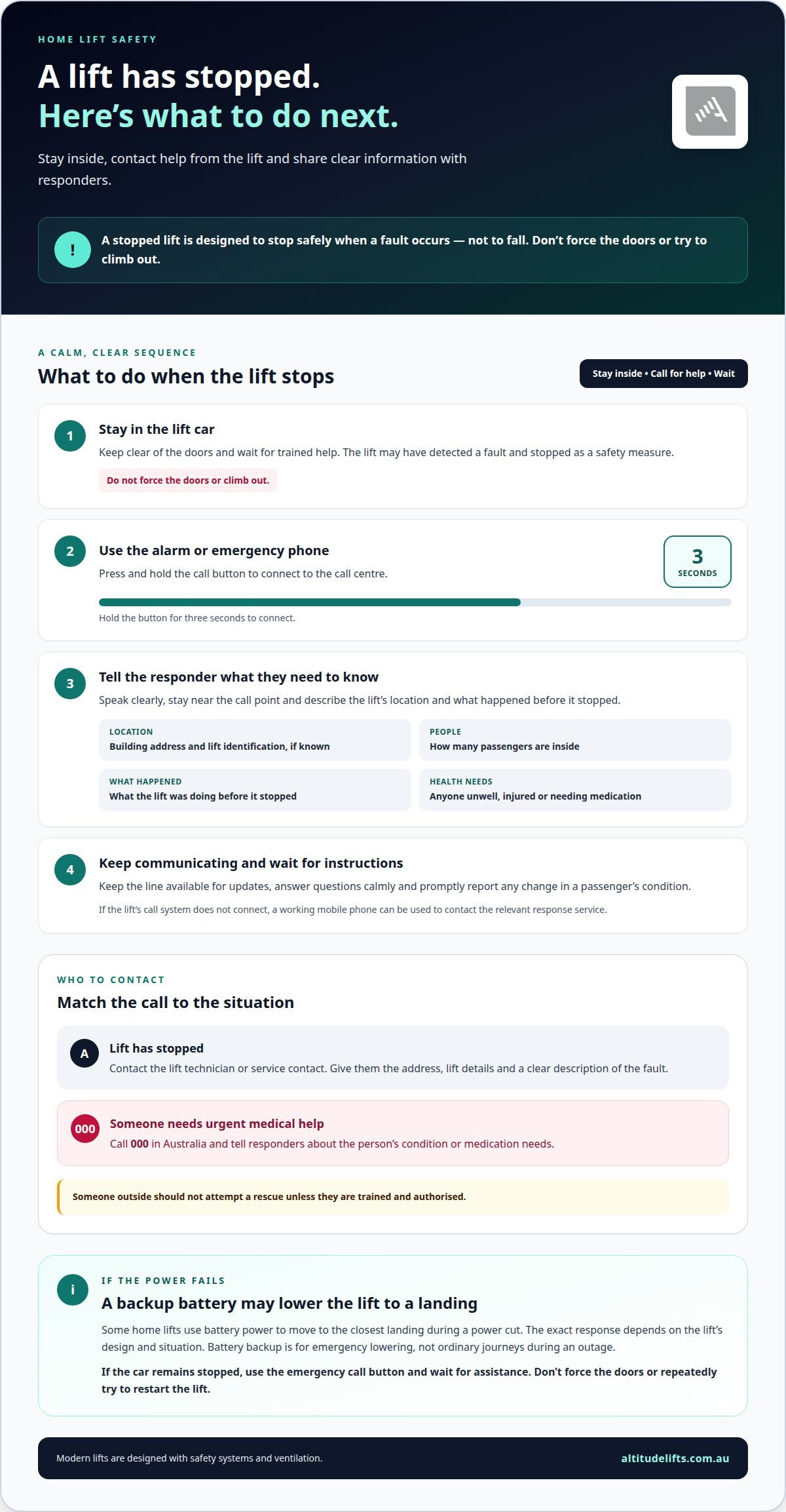
A lift that stops unexpectedly is designed to stop safely when a fault occurs, not to fall. If you’re wondering what happens if a home lift gets stuck, stay inside, use the emergency call button and wait for assistance. Don’t force the doors or try to climb out, as either could cause serious injury.
It’s understandable to feel unsettled by a sudden stop, especially if someone in the lift needs help. Modern lifts have safety systems, and some home lifts can use a backup battery to travel to the closest landing during a power cut. This guide explains what those systems do, how to use the emergency call button, when to call 000 for urgent medical help, and why a lift may stop. You’ll also learn what to expect while help is on the way and how to respond calmly and safely.
Key Takeaways
- Understand why a lift may stop and what its safety systems are designed to do while you wait for help.
- Learn what information to share when using the emergency call button, and when urgent medical help calls for 000.
- Find out how a backup battery may respond to a power cut and why its operation can depend on the lift’s system.
- See why forcing the doors or attempting to climb out is unsafe, and where Liftboy 5 may fit into your home mobility plans.
Are Home Elevators Safe?
Modern lifts have safety systems designed to prevent falls and stop the car safely when a fault occurs. If a lift stops, stay inside and use its emergency call system rather than trying to get out.
Staying safe while trapped
To stay safe, remain inside the lift car and wait for trained help. An unexpected stop can mean the lift’s safety systems have detected a fault and brought it to a halt.
Keep clear of the doors and don’t try to force them or climb out. Someone outside shouldn’t attempt a rescue unless they’re trained and authorised. Lifts are ventilated to provide a constant supply of fresh air, so a stopped car doesn’t mean you should try to open it. Use the emergency call button; the response time depends on the location and agreed maintenance arrangements.
Reassuring trapped passengers
Reassure a trapped passenger with clear, calm information while help is arranged. If you’re outside, tell them to stay inside, keep away from the doors and use the lift’s call button.
Explain that a lift can stop safely when a fault occurs, and that forcing the doors or climbing out could cause serious injury. Stay nearby and keep communicating if possible. Ask whether anyone feels unwell or needs urgent medical help, then pass that information to responders. A clear update can help passengers focus on the next safe step.
Australian safety and maintenance requirements
Australian home lifts are required to meet AS 1735 safety regulations. Regular maintenance helps keep a lift working properly and gives technicians an opportunity to investigate faults before they cause further disruption.
The cost of repairing a stuck lift in Australia depends on the fault, parts and work required. A quote should set out the necessary repair work. A single entrapment can happen to any lift, but repeated incidents in the same lift are a warning sign that needs investigation.
Reducing the risk through maintenance
Regular maintenance can help identify wear and developing faults, reducing the risk of a lift getting stuck. Wear may introduce small metal particles into the lubrication system, where they can cause parts to jam.
A technician can investigate recurring stops and check the lift’s operation, including its power and moving components. If the lift stops repeatedly, record when it happens and share those details during maintenance. A lift that stops working altogether may have a power failure somewhere in the machine, so diagnosing the cause is safer than repeatedly trying to operate it.
Using the lift’s emergency call button
The emergency call button connects passengers with help when a lift stops. Use it to explain what’s happened and share details responders need.
Using the alarm or emergency phone
The alarm or emergency phone lets you contact a response service from inside the lift. Press and hold the call button for three seconds to connect to the call centre.
If the lift has an emergency phone, use it to speak directly with responders. Give the building’s address, the lift identification if you know it, and how many people are inside. Mention any health conditions or medication needs. A working mobile phone can also help if the lift’s system doesn’t connect.
Emergency response and communication
Clear communication helps responders understand the situation and decide what assistance is needed. Stay near the call point, speak clearly, and describe the lift’s location and what happened before it stopped.
Tell the operator if a passenger feels unwell, is injured or needs medication. Keep the line available for updates, and answer follow-up questions as calmly as possible. A lift technician will usually attend an entrapment; emergency services may also attend if someone is unwell. Share any change in a passenger’s condition promptly.
Choosing who to contact
Contact the lift technician or service contact for a stopped lift, and call emergency services if someone needs urgent medical help. In Australia, people who need urgent medical help during a lift entrapment should call 000, according to the Australian Communications and Media Authority.
If a home lift bought online has a problem, contact the seller that supplied it first, according to the ACCC. For a lift that has stopped, give the technician the address, lift details and a clear description of the fault. Don’t attempt a rescue yourself.
Calling for help safely
Use the fitted alarm or phone while remaining inside the lift. This gives responders a direct way to hear about the situation without passengers trying to open the doors.
Hold the alarm button for a few seconds, then state the address, passenger count and any health or medication needs. If you can’t reach the call point, use a working mobile phone to contact the relevant response service. Keep your message brief and clear, and wait for instructions rather than attempting to leave the lift.
Backup batteries during power cuts
A backup battery can help a home lift respond to a power cut. Some home lifts use battery power to lower the car to the closest landing, giving passengers a route out without relying on the normal power supply. The battery’s purpose is emergency lowering, not keeping the lift available for ordinary journeys during an outage. Battery backup is standard on Altitude Lifts’ lifts, allowing safe descent during power outages.
If the power fails while the lift is between floors, the backup system may move it towards a landing. The exact response depends on the lift’s design and the situation. Reaching a landing doesn’t mean passengers should force the doors; use the lift’s controls and follow any instructions provided. If the car stays stopped, use its emergency call button and wait for assistance.
A power cut is one possible reason for a lift to stop, but not every stoppage is caused by an outage. A mechanical or electrical fault may also stop the lift, and a battery lowering system doesn’t diagnose or repair that problem. Treat an unexpected stop as a reason to contact the lift’s response service, rather than repeatedly trying to restart it.
For passengers, the key question is whether the lift begins moving towards a landing after the power fails. Stay inside while it responds, and don’t interfere with the doors or controls. If it doesn’t move, or stops again before reaching a landing, use the alarm or emergency phone. Tell the responder that the power has failed and describe the lift’s position if you can.
Backup batteries are a safety feature, not a reason to take risks during an outage. Their role is to help bring the lift to a landing; passengers should still wait for a safe exit. Regular maintenance helps keep equipment working properly, while a technician can investigate a failure to lower or repeated power-related stops.
Why passengers should not force the doors
Forcing lift doors means trying to open them without the lift’s controls or a technician’s help. It can cause serious injury, especially if the car has stopped between floors. The safest response is to stay inside, move away from the doors and use the emergency call system. A stopped lift’s position may not provide a safe route to the landing.
Press the door-open button once if the doors haven’t opened, then wait. If there’s no response, don’t keep pressing buttons or pull at the doors. The lift may have stopped because a safety system detected a fault. Forcing the doors won’t resolve that fault, and attempting to climb out can expose you to a dangerous gap.
Passengers should stay clear of the doors while waiting for assistance. If someone else is inside, tell them to remain in the car and avoid trying to help them out yourself. A lift technician makes the lift safe by isolating its power before moving the car or opening the doors. That work requires training and the right equipment.
People outside should also avoid pulling doors open or attempting a rescue unless they’re trained and authorised. Even if the car appears close to a landing, its position alone doesn’t establish that an exit is safe. Use the emergency call button to contact help, give responders the lift’s location and passenger details, then follow their instructions.
If you’re waiting outside, keep communication calm and clear. Ask whether anyone inside is unwell, and pass any urgent medical needs to responders. For passengers, staying inside and waiting for a trained technician is safer than trying to exit independently. To explore home lift options for your household, view home lift options.
Altitude Lifts: Liftboy 5
Liftboy 5 is one of the home mobility options available from Altitude Lifts. If you’re planning how to move between floors more comfortably, it may be a useful option to explore alongside the Swift Home Lift Lite, Swift Lift Pro and Compact Elegance Home Lift.
The right lift depends on your home’s layout and the mobility needs you want to address. Altitude Lifts designs residential lifts to fit within existing structures, with minimal building modifications. A conversation about your home and priorities can help identify a suitable option. A new lift won’t replace safe action if an existing lift gets stuck: use its emergency call system and wait for trained assistance.
For help considering Liftboy 5 and other home lift options, contact Altitude Lifts.
Plan for a more accessible home
Knowing what happens if a home lift gets stuck can help you feel prepared. Planning ahead also means considering how your home needs to work over time. Think about who will use the lift, which floors need access and how mobility needs may change. These priorities can guide a conversation about a suitable option, rather than focusing on equipment alone. For families coordinating home accessibility alongside broader disability support services, accessiblecare.com.au provides guidance on tailored NDIS care options.
Altitude Lifts offers the Swift Home Lift Lite, Swift Lift Pro and Compact Elegance Home Lift for residential mobility. Each may be worth considering as you explore ways to make moving between floors more comfortable. A discussion about your home and priorities can help you take a practical next step without rushing the decision. Contact Altitude Lifts for advice and start planning with confidence.
Frequently Asked Questions
Can a stuck lift fall?
A lift stopping unexpectedly doesn’t mean it’s falling. Safety systems are designed to prevent falls, and spring-loaded brakes are designed to bring the lift to rest safely and quickly. Stay inside and contact help rather than testing the doors or controls. If the lift has stopped more than once, note when it happens and share that pattern with the technician investigating the fault.
How long does it usually take?
There isn’t one standard arrival time for assistance. It depends on the lift’s location, the time of day and the maintenance response arrangements. A regional home may take longer for a technician to reach than a city property. While waiting, keep the call line available, give responders clear directions to the lift, and update them if anyone’s health changes.
Should I try to open the doors myself?
No. Don’t pull, pry or force the doors, even if the lift seems close to a floor. The car may not be level with the landing, leaving a hazardous gap. Use the door-open control once, then wait if the doors stay shut. A technician makes the lift safe before moving the car or opening doors, so this is a job for trained personnel.
What should you do immediately if a home lift gets stuck in Australia?
If you’re wondering what happens if a home lift gets stuck, stay inside, keep clear of the doors and use the alarm or emergency phone. Tell the responder the property address, how many people are in the car, and whether anyone is injured or unwell. If someone needs urgent medical help, call 000. Avoid repeatedly operating the lift, as responders need an accurate account of what happened and its current condition.
Should you try to open the doors or escape from a stuck home lift?
No. Don’t force the doors or climb out, because either action can cause serious injury. Even when the car appears near a landing, its position doesn’t show whether the exit is safe. If you’re outside, don’t attempt to release passengers unless you’re trained and authorised. Keep communication calm, pass on any urgent concerns, and wait for trained assistance.
What emergency release or battery backup features do Australian home lifts have?
Features vary by lift, but some home lifts have a backup battery that can lower the car to the closest landing during a power cut. This is different from a passenger-operated door release. Don’t try to access a release mechanism or move the car yourself. On Altitude Lifts’ lifts, battery backup is standard and allows safe descent during power outages.