
Quiet operation is more than a comfort feature; it can help a stairlift feel at home in your daily routine. A stairlift designed for silent operation should move smoothly without dominating the sounds of the house, although the noise you hear can depend on its motor, track and condition. The right setup also needs to support safe, confident travel between floors.
It’s reasonable to want clear answers before choosing a stairlift, especially if noise, safety and ongoing costs are part of your decision. This guide explains what can affect operating sounds, how safety sensors detect obstacles and stop the lift, what influences battery replacement costs, and what installation involves in an Australian home.
You’ll also see why staircase layout and the lift’s fit matter, and how these details shape a practical solution. With the basics understood, you can make a more informed decision about quieter access at home.
Key Takeaways
- Learn how stairlift safety sensors detect obstacles and stop the lift, and why these features matter during everyday use.
- Stairlift batteries typically last around 5 years; understand what can affect replacement costs and ongoing upkeep.
- Identify how the staircase layout and power access can shape installation requirements in your home.
- Recognise how movement, maintenance and the lift’s setup can affect operating noise, so you know what to consider when choosing a quieter option.
Safety sensors and stopping mechanism
A stairlift’s obstruction sensors detect objects in the carriage’s path and stop the lift from continuing. If a shoe, object or pet enters the travel path, the sensor should trigger a stop. Clear the obstruction before operating the controls again. Altitude Lifts stairlifts include obstruction sensors, which stop the lift if they detect an obstruction.
This safety stop is separate from releasing the control. The user operates the control to move the lift, and releasing it stops movement. Obstruction sensors address a different risk, such as a laundry basket left beside the stairs. Keep steps and landings clear too, because sensors cannot remove objects or prevent someone from entering the area.
- Before travel: Check the seat, footrest and route for items that could catch against the lift.
- During travel: Keep the control engaged as instructed, and avoid reaching towards the track or moving parts.
- If the lift stops: Let go of the control, look for an obstruction and follow the operating instructions before restarting.
Safety also depends on matching the lift to the person and staircase. Stairlift capacities vary by brand and model, with a market range of 120kg to 180kg. That range isn’t a substitute for the specific model’s rated capacity. A curved staircase, including a 90-degree bend, may require a track designed to follow its route. Correct positioning helps the carriage travel along the intended path.
Security features can include a key switch that prevents operation when the key is removed, depending on the model. This can help limit unsupervised use by children or visitors. Ask for the controls and stopping response to be demonstrated during handover. Practise starting, stopping and responding to an obstruction while the lift is stationary first. Clear instructions make it easier to understand what a safety stop means and what action to take next.
Battery lifespan and replacement cost
A stairlift’s battery supports operation when the lift isn’t drawing power directly from its charging point. Batteries typically last around 5 years before needing replacement. That’s a guide, not a fixed expiry date: use patterns and the battery’s ability to hold charge affect when replacement becomes necessary.
Pay attention to changes in everyday use. If a lift travels a shorter distance before needing to recharge or struggles to complete a usual journey, its battery or charging system may need attention. A technician can assess both rather than replacing parts by guesswork.
To help understand the issue, note three practical details before arranging an assessment:
- Model details: The make and model help identify the compatible battery type.
- Recent behaviour: Record when the lift slows, stops or needs charging more often.
- Charging routine: Describe where the lift is usually parked and whether it reaches its charging point.
Replacement cost depends on the battery specification, the stairlift model and the work needed to access and fit the battery. The price depends on the individual case and is given after a quote request. A compatible battery matters: fitting an unsuitable type can affect how the lift charges and operates.
Keep the charging area clear and follow the operating and care instructions supplied with the lift. Don’t open the battery compartment or attempt a replacement unless the manufacturer’s instructions authorise it. If the lift stops charging after being parked in its usual position, note the change and arrange an assessment. This can help distinguish a battery concern from an issue with the charging point or connection.
If you’re weighing up home access options, explore stairlift options alongside the battery and charging needs of your staircase.
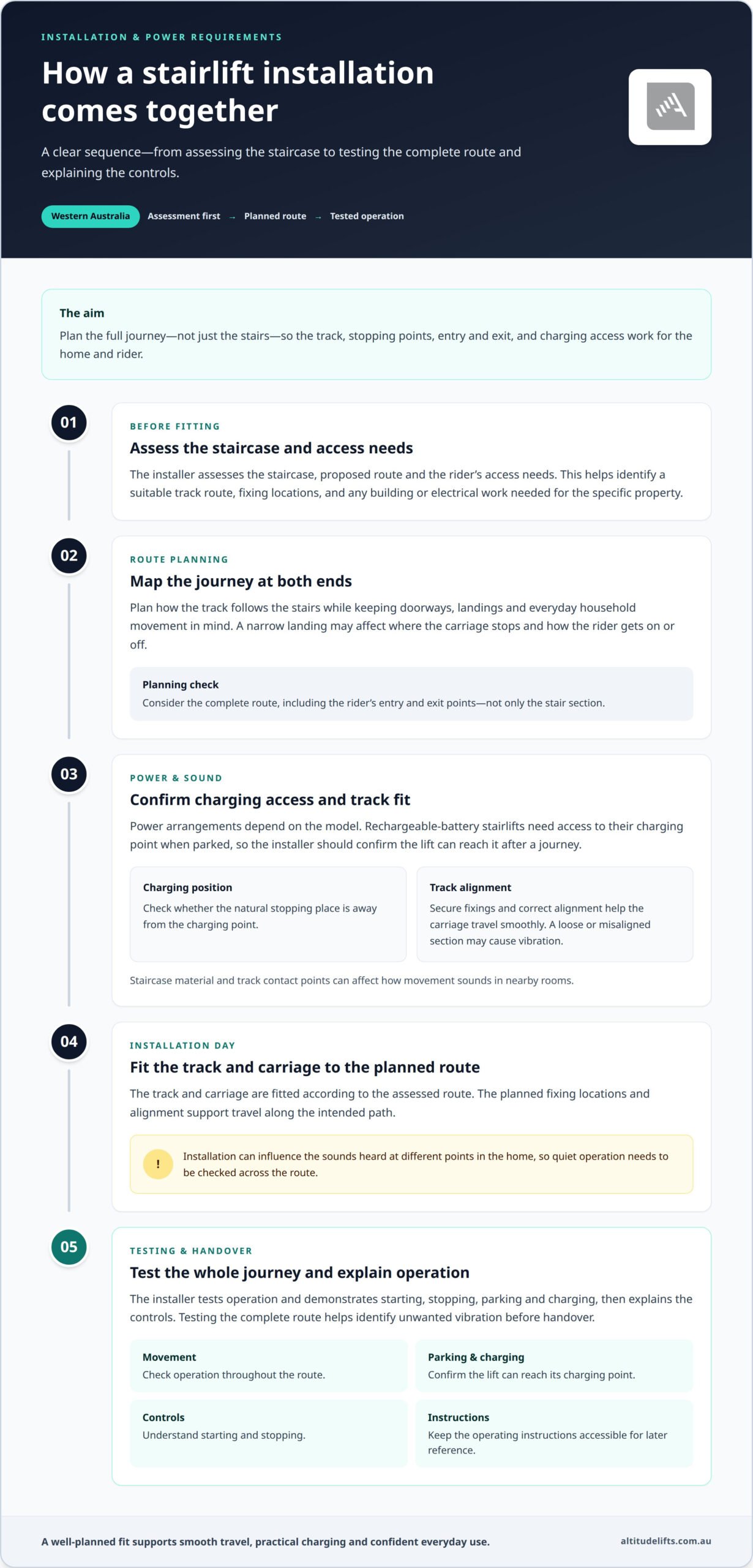
Installation and power requirements
Before installing a stairlift in Western Australia, the staircase and proposed installation need to be assessed. This helps identify the appropriate track route, fixing locations and any building or electrical work required for the specific property.
Installation begins with an assessment of the staircase, proposed route and user’s access needs. The installer considers whether the track can follow the stairs without obstructing doorways, landings or everyday household movement. For example, a narrow landing may affect where the carriage stops and how the user gets on or off. Planning the full route helps ensure the lift works at both ends, not just on the stairs.
A stairlift designed for silent operation also needs a well-fitted track. Secure fixings and correct alignment help the carriage travel smoothly, while a loose or misaligned section may cause vibration. The staircase material and track contact points can affect how movement sounds in nearby rooms. Testing the complete route during installation helps identify unwanted vibration before handover.
Power arrangements depend on the model. Some stairlifts use rechargeable batteries, which need access to their charging point when parked. The installer should identify the charging position and confirm the lift can reach it after a journey. This matters in homes where the natural stopping place is away from the charging point.
Before fitting, the installer assesses the staircase, fixing locations, power access and the rider’s entry and exit points. On installation day, the track and carriage are fitted to the planned route and operation is tested. The installer demonstrates starting, stopping, parking and charging, then explains the controls. A silent operation stairlift should be tested throughout its route, since installation can influence the sounds heard at different points in the home. Keep the operating instructions accessible for later reference.
Noise during stair lift operation
Operating sound depends on the lift, its track and its installation. To assess quietness, listen to a complete journey rather than judging the motor while stationary.
Noise by stairlift type
A straight stairlift follows a direct track, while a curved model follows turns and landings. Neither design is automatically quieter: the motor, drive system, track fit and condition all contribute to operating sound. During a demonstration, listen at the bottom, beside the stairs and upstairs. Note any changes at turns or stopping points.
Brands with quiet operation
Brand names alone can’t establish how quietly a specific stairlift will run. Australian models may differ in motor design, track configuration and installation, so compare the exact model rather than relying on a general brand claim. Listen to the lift over a complete journey, including any turn. Smooth, consistent movement can help you assess whether a silent operation stairlift suits your home.
Installation effects on operating noise
Track alignment and secure fixing affect how vibration travels into the staircase. A poorly fitted section may rattle or change sound as the carriage passes. Staircase material and the track’s contact points can also influence what you hear in nearby rooms. Testing the full route after installation helps identify unusual vibration or noise before handover.
Maintenance to prevent noise
Dust or debris near moving parts can contribute to noise, while wear may change the lift’s usual sound. Keep the stair area clear and follow the manufacturer’s cleaning and maintenance instructions. Don’t apply lubricant unless the manual specifies it, as products and lubrication points vary by model. If a new squeak, rattle or grinding sound develops, stop using the lift and arrange an assessment rather than adjusting the track yourself.
Want a quieter home-access solution? Explore stairlift options and consider how the model, track and installation fit your staircase.
Altitude Lifts: Alpha Stairlift
Altitude Lifts supplies and installs the Alpha Stairlift for people who need a practical way to travel between floors at home. If using the stairs has become difficult, the Alpha Stairlift is an option to consider in light of your staircase layout, daily routine and preference for quiet operation.
A suitable choice depends on how the stairlift fits your staircase and how its movement sounds in your home. The motor, track, installation and maintenance all influence operating noise, so consider these details together rather than relying on a general claim about quietness. Altitude Lifts can help you consider the Alpha Stairlift in relation to your home-access needs. If a home lift is more appropriate for your layout, Swift Home Lift Lite, Swift Lift Pro and Compact Elegance Home Lift are also available.
Contact Altitude Lifts to discuss your home-access needs and the Alpha Stairlift.
Plan for quieter access at home
Choosing a stairlift designed for silent operation is ultimately about how it fits into your daily life. Consider when the stairs are busiest, which rooms are near the staircase and how the lift will fit around everyday movement through your home. These details turn a general preference for quiet into practical priorities.
You don’t need to settle every detail alone. A conversation about your staircase and access needs can help bring the practical considerations together, so your next step feels considered rather than rushed. If you’re ready to explore a suitable option, talk through your stairlift plans with Altitude Lifts.
With the right information and a solution suited to your home, moving between floors can feel more manageable. Take the next step when you’re ready.
Frequently Asked Questions
Which stairlifts are rated quietest in Australia?
A quietest ranking needs comparable test results for the exact models, not brand names alone. Listen to a complete demonstration and consider how the sound changes along your staircase. Altitude Lifts offers the Alpha Stairlift, but no model-specific quietness rating is provided here. Focus on the actual movement and how it sounds in the rooms where you spend time.
How many decibels do stairlifts produce while operating?
There isn’t one sound measurement that applies to every stairlift. The sound can vary with the model, track, installation, room acoustics and distance from the lift. If you compare measurements, use the same meter position and record the same part of the journey, such as startup, steady travel or stopping. A reading taken nearby may differ from one taken across the room.
What makes a stairlift noisy, and how can the noise be reduced?
Track vibration, debris or a change in the lift’s condition can affect its operating sound. Note whether the noise occurs at startup, throughout the trip or at one particular point, then share that pattern during an assessment. For example, a rattle heard only near a landing provides useful context. Follow the model’s care instructions, and don’t adjust moving parts yourself.
What should I check when comparing stairlifts for quiet operation?
Compare each lift over the same route and listen from the rooms where noise matters most, such as a bedroom beside the stairs. Notice the sound at startup, during steady movement and at stops, rather than judging only a short demonstration. Ask for the operating and care instructions too. They explain routine upkeep and can help you recognise changes in the lift’s usual sound.