
A conversation about a stairlift should start with your parent’s independence, not pressure. If you’re thinking about convincing your parents they need a stairlift, choose a calm moment, share what you’ve noticed without blame and invite them to explore the options. An assessment can consider the staircase and mobility needs, explain suitable stairlift options and answer questions about installation and use.
It’s understandable to worry about safety while respecting your parent’s choices. A thoughtful discussion can make room for both: focus on what they want to keep doing at home, listen to concerns about appearance or space, and let them decide what happens next. This guide offers practical ways to raise the subject, discuss possible benefits without dismissing their feelings, and present an assessment as a chance to explore options, not a commitment.
Key Takeaways
- Frame a stairlift as a way to keep using the home and routines your parent values, rather than as a loss of independence.
- Talk through concerns about appearance and space together; a home survey can help explore how the staircase affects the options.
- Share specific safety concerns calmly, while keeping your parent involved in decisions about their mobility and home.
- Choose a relaxed moment to start the conversation, listen to your parent’s priorities and let them decide what step to take next.
Is getting a stairlift giving up independence?
Not necessarily. A stairlift may help your parent keep using a multi-level home when climbing stairs becomes difficult. Focus the conversation on the rooms and routines they want to keep within reach.
-
Frame the stairlift as an independence tool
Start by asking which parts of home life matter most, such as sleeping upstairs or reaching a favourite sitting room. Then explain how a stairlift carries them between levels without needing to climb the stairs on foot. Don’t present it as a decision you’ve already made. The aim is to explore whether it supports their choices.
-
Explain the safety and mobility benefits
Describe the practical change: your parent can travel between floors seated rather than climbing each step. A stairlift reduces the need to use the stairs on foot, and all Altitude Lifts come with standard battery backup that allows descent to the lower level during a power outage. Keep the discussion specific to a difficulty they’ve mentioned, without promising that a lift removes every mobility risk.
- Compare options by what your parent needs to do at home. A stair rail offers support while they continue climbing; a stairlift carries them along the staircase, while a home lift travels between floors. Moving to a single-storey home avoids stairs but changes where they live. The right comparison depends on mobility, the home layout and their preferences.
- For Australian government funding or rebates, ask whether a support scheme relevant to your parent’s circumstances can contribute. Eligibility, covered modifications and application steps depend on the scheme and the person’s situation, so don’t assume a stairlift will automatically be funded.
- Arrange an assessment that considers the staircase and your parent’s mobility needs. It can explain suitable options and answer questions about installation and operation. Invite your parent to take part and raise practical concerns, such as getting on and off the seat. After installation, follow the lift’s operating and maintenance instructions, including the recommendation for annual service.
Addressing concerns about appearance and space
Make the discussion practical: separate concerns about appearance from questions about clearance and installation. An assessment can help your parent consider both in relation to the staircase they use every day.
-
Acknowledge appearance concerns
Ask what your parent dislikes about having equipment on the stairs, then discuss that concern without brushing it aside. Modern stairlifts are designed to fold away when not in use, and they don’t damage the walls or staircase. Talk through how a folded lift might look in their home, including whether it suits the hallway’s appearance and leaves the space feeling comfortable.
-
Discuss space and technical concerns
Ask your parent to identify where they worry about moving past the lift, then have the staircase assessed for its layout and clearance. Stairlifts can suit straight, curved, split-level and outdoor staircases. A straight staircase as narrow as 66 centimetres, or a curved staircase around 70 centimetres wide, may accommodate a lift depending on the layout and proper assessment.
- Keep the discussion focused on the whole staircase and the space available, not just one width measurement. An assessment considers the staircase shape and room for the lift and its user. For Australian homes, the proposed installation needs to suit the building and staircase and meet applicable requirements. An assessment can identify relevant constraints and explain the arrangement.
- Invite your parent to look at the stairs together and describe what would make installing equipment feel acceptable. For example, they might prioritise keeping the hallway usable or choosing a position that feels less prominent. A staircase assessment can help turn those concerns into practical questions, giving your parent clearer information before deciding whether to proceed.
Discussing safety without undermining autonomy
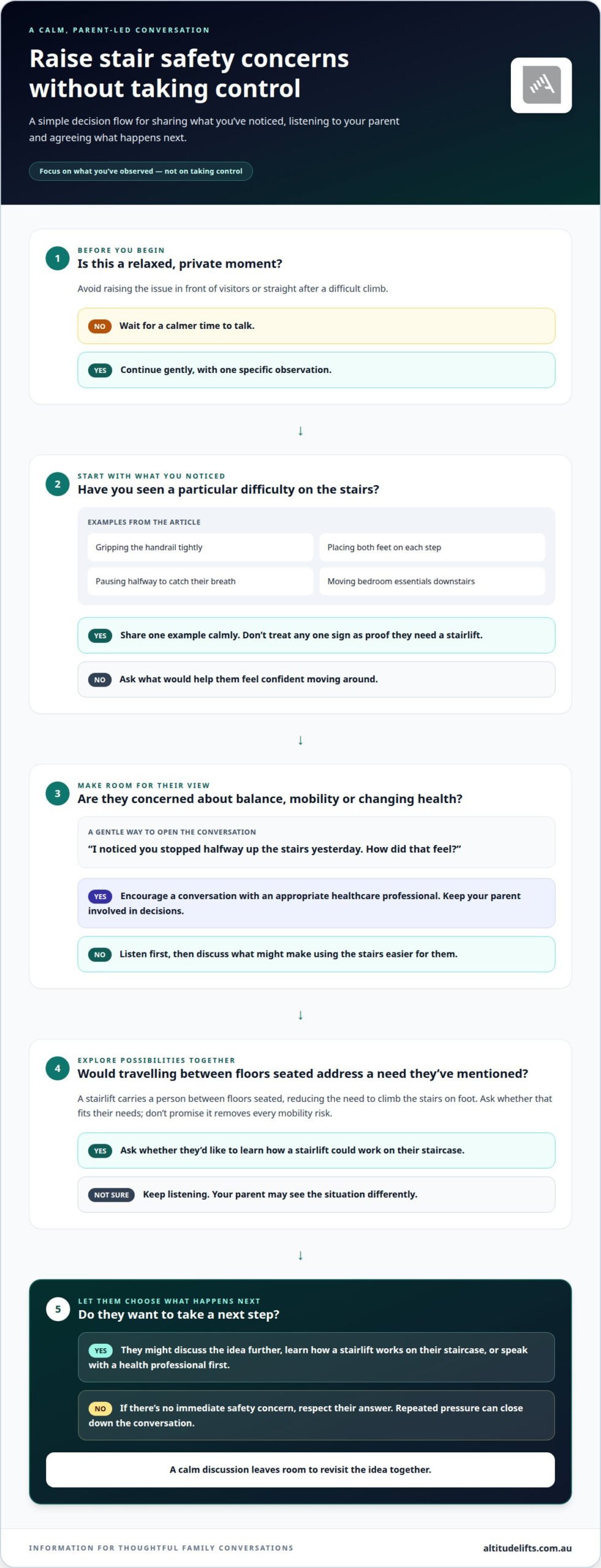
Keep the discussion focused on what you’ve observed, not on taking control. Specific examples can help your parent consider other ways to use the stairs.
-
Notice signs a stairlift may be needed
Describe particular difficulties you’ve noticed, such as gripping the handrail tightly or placing both feet on each step. Pausing halfway to catch their breath may also suggest the stairs are becoming harder. Notice whether your parent has moved bedroom essentials downstairs to avoid the upper floor. Share observations calmly, without treating any one sign as proof they need a stairlift.
-
Raise safety concerns sensitively
Choose one example and explain why it concerned you. You might say, “I noticed you stopped halfway up the stairs yesterday. How did that feel?” Then listen before suggesting changes. Avoid raising the issue in front of visitors or straight after a difficult climb. Your parent may see the situation differently, so make room for their perspective and ask what would help them feel confident moving around.
-
Discuss fall prevention and safety
Talk about reducing the need to climb stairs on foot, rather than promising that a stairlift prevents every fall. Explain how it could make travelling between floors easier, then ask whether that fits their needs. If they’re concerned about balance, mobility or changing health, encourage a conversation with an appropriate healthcare professional. Keep them involved in decisions about any next step.
- Ask what they’d like to do next instead of arranging an assessment without their agreement. They might want to discuss the idea further, learn how a stairlift works on their staircase, or speak with a health professional first. If they decline and there’s no immediate safety concern, respect their answer. Repeated pressure can close down the conversation; a calm discussion leaves room to revisit it together.
Advice for discussing stairlifts with an older parent
A productive conversation respects your parent’s preferences while making room for practical options. If convincing parents they need a stairlift feels difficult, shift the focus from persuading them to understanding what they want. These steps can help you raise the subject without turning support into pressure.
- Choose a calm moment, rather than raising a stairlift after a difficult climb or disagreement. A quiet conversation over a cuppa gives your parent time to listen and respond. Avoid starting in front of relatives, where they may feel watched or pushed to agree. If they seem tired or distracted, suggest talking another time.
- Talk about activities your parent wants to keep doing, not what you think they can no longer manage. Ask whether they want to sleep in their own bedroom, reach the garden, cook upstairs or use every room. Their priorities create a respectful basis for considering whether easier access between floors could help.
- Ask what worries them about a stairlift before offering solutions. They may be concerned about the home’s appearance, available space or what the change says about their independence. Listen without correcting them, then respond to the specific concern they’ve raised. The aim isn’t simply convincing parents they need a stairlift, but understanding whether it suits their priorities.
- Offer an assessment as a way to gather information, not as a commitment to install a lift. Let your parent choose when to arrange it and encourage them to prepare questions about the staircase, everyday use and installation. If a professional assessment would help, discuss whether an occupational therapist could also review the home.
- If your parent says no and there’s no immediate safety concern, don’t keep repeating the same argument. Acknowledge their decision and agree to revisit the subject if their needs or views change. If they’re worried about changes to their health, balance or mobility, encourage a conversation with an appropriate healthcare professional. When they’re ready to explore options, discuss a stairlift for their home.
Altitude Lifts: Alpha Stairlift
Altitude Lifts’ Alpha Stairlift may be a practical next step when your parent wants to keep using different levels of home but finds the stairs difficult. It gives families a specific option to discuss after considering mobility, staircase layout and your parent’s preferences.
If the conversation points towards travelling between floors without climbing, a stairlift may suit the need better than considering a home lift. Altitude Lifts also offers the Compact Elegance Home Lift, Swift Home Lift Lite and Swift Lift Pro for home lift needs. The right option depends on the home and the access your parent wants to maintain.
Keep your parent involved in deciding whether to explore a stairlift further. For a considered discussion about the Alpha Stairlift and your family’s needs, contact Altitude Lifts for free advice.
Let the next conversation happen at their pace
Convincing your parents that they need a stairlift isn’t the only way to approach this decision. A more useful next step may be agreeing on what they’d like to understand, then letting them choose when to explore it. That keeps the decision theirs while making room for a practical conversation about mobility at home.
If your family is considering options beyond a stairlift, Altitude Lifts also offers the Swift Home Lift Lite, Swift Lift Pro and Compact Elegance Home Lift. The right option depends on your parent’s priorities and home. There’s no need to settle everything in one conversation. A question, a pause and a follow-up when they’re ready can make progress feel manageable.
Contact Altitude Lifts to discuss options and take the next step at a pace that feels right for your family.
Frequently Asked Questions
Can a Home Survey Help?
Yes. An assessment can give your parent an opportunity to discuss concerns in the context of their own staircase. Treat it as a way to gather information, not an agreement to install anything. They can prepare questions about how a stairlift would fit their home and explain which parts of moving between floors they find difficult. That keeps the discussion practical and centred on their priorities.
Can a stair lift be folded away when other family members use the stairs?
Yes. Stairlifts can fold up when they aren’t being used, so family members can still use the staircase. They’re mounted on the existing stair treads and use a rail-mounted carriage with a battery-driven motor. Ask your parent to consider how the folded lift would affect the household’s usual movements, such as carrying laundry or walking upstairs together, as well as their own access.
How do I explain that a stair lift prevents moving to assisted living?
Don’t promise that a stairlift will prevent a move to assisted living. It addresses access between floors, but doesn’t meet every possible support need. You could say, “Would it be useful to explore whether easier stair access could help you keep using your home?” That invites your parent to consider one option without making a prediction about their future care or living arrangements.
What Should You Say?
Try a specific, open statement: “I want to understand what’s becoming harder at home, and whether there’s anything you’d like to explore.” This avoids telling your parent what they need before hearing their view. If they mention difficulty with the stairs, ask what they would change about getting between floors. Let their answer guide whether you discuss a stairlift or another option.
What if Your Parent Still Says No?
Accept their answer and ask whether there’s a particular concern behind it, such as the timing or the idea of changing their home. If they don’t want to discuss it further, pause rather than bringing it up at every visit. You can leave the door open with, “If you ever want to revisit this, I’m here to talk.” That respects their choice and keeps communication open.
What if my parent is worried about how a stairlift will look?
Ask what part of the appearance concerns them, then discuss that detail rather than dismissing it. Stairlifts are designed to fold away when not in use. Your parent could consider how a folded lift would look against their staircase and whether it suits the feel of the home. Their preferences should shape whether the change feels right.