
Fear of stairs can be more than ordinary caution: bathmophobia is an extreme fear of stairs or slopes, including steep hills, that disrupts everyday life. A practical fear of falling on stairs solution may combine safer surroundings, such as removing tripping hazards and wearing appropriate footwear, with support to manage anxiety. The right approach depends on what is driving the fear and how it affects your daily routine.
If stairs make you feel tense or unsteady, avoiding them may seem like the safest choice. But when fear starts limiting where you go or what you do, it’s worth considering what could help.
This article explains bathmophobia, how fear of falling can affect everyday life, and why it may arise. You’ll also learn about home safety adjustments, lifestyle changes and options for making movement around your home more manageable.
Key Takeaways
- Bathmophobia is an extreme fear of stairs or slopes that can interfere with everyday life; recognising its impact can help you decide what support may be useful.
- Avoiding stairs may feel protective, but restricting activity can affect fitness and may increase the risk of falling.
- Fear of falling is common among older adults, and exercises that build balance, strength and flexibility can help support confidence.
- A previous serious fall can contribute to ongoing fear, so consider both physical safety and emotional wellbeing when planning changes.
- Removing trip hazards, choosing appropriate footwear and considering mobility options can make moving around home feel more manageable.
Complications and avoidance
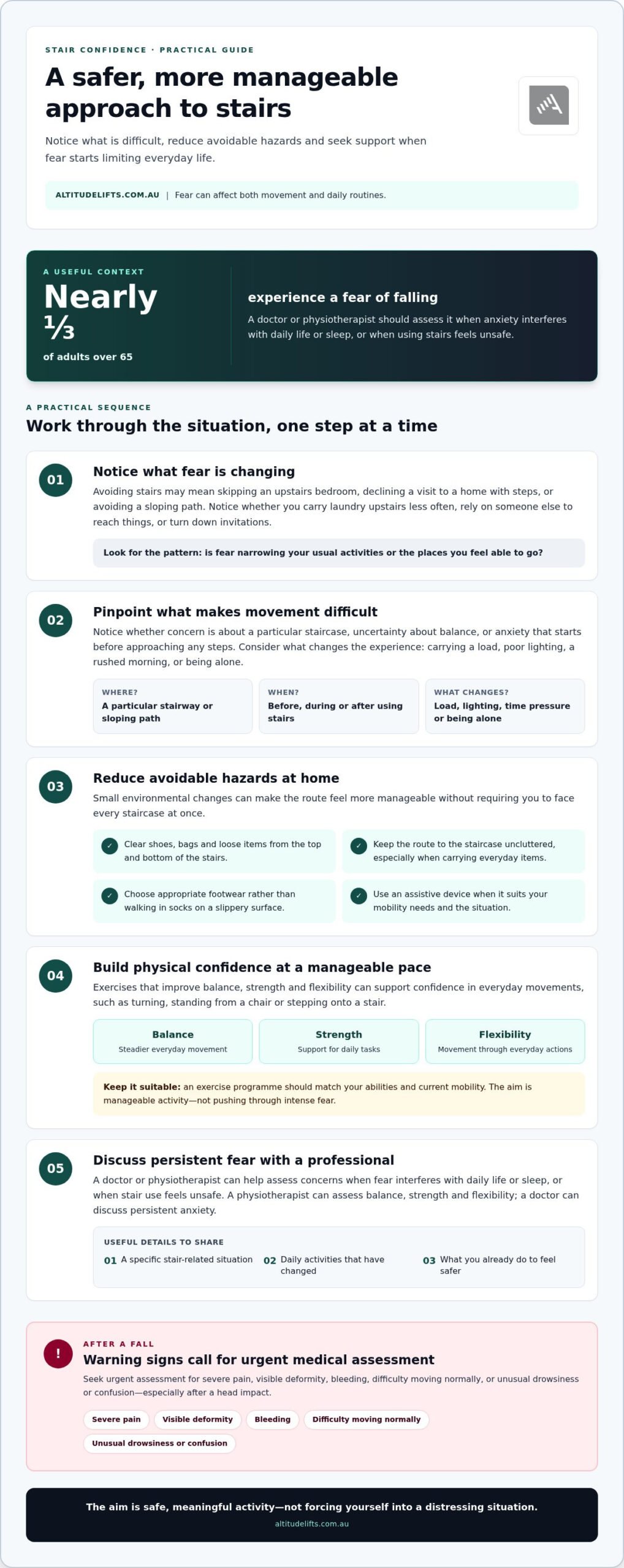
When stairs feel threatening, avoiding them can seem like a sensible way to prevent a fall. But avoidance can gradually shape everyday choices. Someone may stop visiting a friend whose home has steps, skip an upstairs bedroom, or avoid a sloping path to a local park. Over time, the places that feel manageable may become limited to home or familiar settings.
This pattern can affect movement as well as social routines. The National Institute on Aging notes that limiting activities because of fear of falling can reduce physical fitness and increase the risk of falling. Less activity may make ordinary tasks feel harder, reinforcing worries about stairs. The concern is not just whether you use one staircase, but whether fear is narrowing your daily life.
Notice what avoidance is changing. Do you carry laundry upstairs less often, rely on someone else to reach items, or decline invitations because of steps? These details can help you explain the problem to a health professional. They can also show whether the main challenge is a particular staircase, uncertainty about balance, or anxiety that appears before you approach any steps.
Practical changes can reduce avoidable hazards without requiring you to face every staircase at once. Consider these examples:
- Clear shoes, bags and loose items from the top and bottom of the stairs.
- Keep the route to the staircase uncluttered, especially when carrying everyday items.
- Choose appropriate footwear rather than walking in socks on a slippery surface.
- Use an assistive device when it suits your mobility needs and the situation.
These steps address the environment, but persistent anxiety may need separate attention. A healthcare provider can help assess fear that interferes with daily life or sleep. Describe specific situations, such as feeling unable to use the stairs at home or avoiding a sloping footpath. Clear examples make it easier to explain how fear affects your routine and discuss what support may help.
A useful goal is maintaining safe, meaningful activity, not forcing yourself into a distressing situation. If a staircase feels difficult, note what changes the experience: carrying a load, poor lighting, a rushed morning, or being alone. This information can guide sensible home adjustments and a conversation about support. If fear keeps you at home or stops essential tasks, treat that change in routine as a reason to seek help.
Fear of falling among older adults
Nearly one-third of adults over 65 experience a fear of falling. A doctor or physiotherapist should assess it when anxiety interferes with daily life or sleep, or when stair use feels unsafe.
Age-related concerns
For older adults, fear of falling means anxiety about losing balance or getting hurt during everyday movement. It matters because avoiding stairs or other activities can affect independence and confidence. The National Institute on Aging notes that limiting activity because of fear can reduce physical fitness and increase the risk of falling. For example, avoiding a familiar staircase may also mean missing activities upstairs.
Exercises that improve balance, strength and flexibility can support confidence. These abilities matter during everyday movements, such as turning, standing from a chair or stepping onto a stair. An exercise programme should suit the person’s abilities and current mobility, rather than asking them to push through intense fear. Progress can focus on manageable activities that build confidence alongside physical capacity.
Notice what makes movement difficult. Is it a particular flight of stairs, carrying a basket, or feeling unsteady when changing direction? Sharing these examples helps clarify whether the main concern is the environment, physical confidence or anxiety. It can also make conversations about suitable support more specific.
Seeking professional assessment
A professional assessment considers how fear affects movement, confidence and daily routines. It can be helpful if you’re avoiding necessary activities, feeling persistently anxious, or sleeping poorly because of fear. Describe what happens on the stairs, including whether concern arises before stepping on, during movement or afterwards. These details give a doctor or physiotherapist a clearer picture.
A physiotherapist can assess balance, strength and flexibility, then consider exercises suited to your abilities. A doctor can discuss persistent anxiety that interferes with daily life or sleep. If you’ve recently changed how you use stairs, explain what changed and give a practical example, such as avoiding the upper floor or needing help with routine tasks.
Before an appointment, note situations that trigger concern and how they affect your week. For example, record whether fear appears on every staircase or only when carrying items. Include changes to your usual activities and the steps you already take to feel safer. This gives the conversation a useful starting point without reducing the issue to a single moment.
- Describe a specific stair-related situation.
- Explain which daily activities have changed.
- Ask how balance, strength and flexibility relate to your concern.
When stairs at home limit access between floors, exploring home mobility options can be part of considering the environment alongside professional support.
Fear of falling and possible injuries
A fall can cause serious injuries, and that experience may contribute to fear of stairs or slopes. Warning signs after a fall include severe pain, visible deformity, bleeding, difficulty moving normally, or becoming unusually drowsy or confused. Treat these signs as reasons to seek urgent medical assessment, especially after a head impact.
The effects can continue after an injury has healed. Someone who slipped on a staircase may remember their foot moving unexpectedly, then feel tense when approaching similar steps. That response can make ordinary features seem threatening, such as a narrow landing, a change in stair height or carrying something while walking.
Fear and physical injury need separate attention. Pain, weakness or restricted movement can affect how someone uses stairs, while anxiety can arise even when there’s no injury. If both occur, describe each clearly during an appointment. For example, explain whether pain changes your step or whether worry begins before you reach the staircase.
After a fall, focus first on immediate safety rather than testing the stairs again. If the person appears seriously injured, avoid moving them unnecessarily and seek urgent medical help. If there are no urgent warning signs, note where the fall happened and what contributed: a loose mat, clutter, poor visibility or rushing to answer the phone.
Those details can guide practical changes at home. Remove the specific object that caused a trip, keep the stair route clear and improve visibility where the incident occurred. For example, if a bag near the bottom step caused an obstruction, move it to a storage spot away from the stairway. Address the actual hazard rather than relying on guesswork.
Emotional recovery also deserves attention. A previous traumatic fall can leave someone expecting another injury, even on a familiar staircase. If fear persists or disrupts daily life or sleep, discuss it with a healthcare provider. Explain what happened, which activities now feel difficult, and whether anxiety appears only around stairs or in other situations too.
Returning to stairs should be guided by the person’s comfort and physical needs. After an injury, for example, a physiotherapist can assess movement and help identify suitable ways to rebuild confidence. Avoid turning recovery into a test of willpower. The useful next step is understanding which part of the situation creates risk or distress.
- Describe the fall location and any visible hazard.
- Separate pain or movement changes from fear responses.
- Seek urgent assessment for serious warning signs.
These observations connect the injury, the environment and the emotional response. They can help shape a more relevant conversation about safety and support.
Fear of heights and fear of falling
Fear linked to stairs can involve height, the possibility of falling or the movement itself. Bathmophobia describes an extreme fear of stairs or slopes, including steep hills, that disrupts everyday life. Identifying the trigger matters: fear on a balcony may differ from anxiety that begins when approaching steps.
Climacophobia may be confused with bathmophobia, but its typical trigger is the expectation of climbing or descending stairs. Someone might feel distressed before reaching a staircase, rather than fearing a steep hillside or elevated place. These terms can describe patterns, but they don’t replace an individual assessment.
The Diagnostic and Statistical Manual of Mental Disorders, DSM-5, does not recognise fear of stairs or slopes as a distinct phobia. A specific phobia is generally diagnosed only when fear persists for more than six months. That distinction is useful if you’re trying to understand persistent symptoms, but the label alone doesn’t explain what causes your fear.
Bathmophobia symptoms can include dizziness, sweating, heart palpitations, nausea, shortness of breath and trembling. You might notice a racing heart when looking down a staircase, for instance, or feel nauseated before stepping onto a slope. These physical reactions can feel alarming and may lead you to avoid the situation.
Dizziness also has possible medical explanations. Dizziness or spinning sensations can have causes other than fear. Fear linked to an existing vertigo condition isn’t considered a phobia. If changes in height bring on spinning sensations, describe that experience separately from anxiety when discussing your symptoms with a healthcare provider.
Psychological treatment can address fearful thoughts and reactions. Cognitive behavioural therapy explores why stairs feel threatening and helps you practise more balanced interpretations. For example, therapy may examine the thought that every stairway is unsafe, then work on responses that fit the actual situation. Treatment focuses on the pattern affecting your life, not simply the name given to it.
Exposure therapy uses gradual, controlled contact with triggers, such as images or stair-related situations, with a therapist. The aim is to reduce sensitivity over time, not force a sudden confrontation. A therapist can pace this work around your reactions. Measured breathing, meditation, adequate sleep, nutritious food and exercise can also support stress management.
If anxiety persists and disrupts daily activities or sleep, contact a healthcare provider. Sharing whether symptoms start with heights, stair movement or dizziness can help clarify what support may suit your situation.
Home safety and lifestyle changes
Reduce avoidable hazards first, then build confidence with movement that suits your ability. To practise using stairs, choose a clear, familiar staircase, wear secure footwear and use the handrail. Move at a comfortable pace, focus on the steps and pause if you feel unsteady.
Prepare the route before practising. Remove loose objects from each step and keep the landing clear. Good lighting can make step edges easier to see, particularly when daylight changes. Avoid carrying laundry or other items during practice so your hands remain available for support. If you use an assistive device, use it as directed.
Small changes can make the route easier to manage. Check whether a mat, shoes or a power cord is near the stairs. Move it elsewhere rather than stepping around it. Choose footwear that feels secure and suits the surface. These practical measures won’t address every source of fear, but they can reduce common trip hazards.
- Clear the steps and landings of clutter.
- Wear appropriate footwear instead of walking in socks.
- Keep everyday items off the stair route.
- Use an assistive device when needed and suited to your mobility.
Exercises that improve balance, strength and flexibility can help older adults manage fear and build confidence in their physical abilities. A physiotherapist can help match exercises to your needs. Examples might include controlled standing from a chair to build leg strength, or supported balance practice near a stable surface. Suitable movement depends on your ability and current comfort.
Build exercise into familiar routines rather than treating it as a test. For example, practise standing from a chair during a normal daily activity, then notice whether the movement feels controlled. Balance and flexibility activities can complement strength work. If an exercise causes pain, dizziness or marked unsteadiness, stop and discuss it with a health professional.
Keep the goal practical: safer movement and access to the parts of home you use. If stairs remain a barrier despite hazard removal and suitable activity, consider whether a different way to move between levels would better suit your home. Explore home mobility options as part of that decision.
Altitude Lifts: Swift Home Lift Lite
Altitude Lifts’ Swift Home Lift Lite offers a home lift option when stairs make moving between levels difficult. It may suit households looking for another way to access different floors, alongside practical safety changes and support for managing anxiety.
A home lift changes how you move between levels; it doesn’t treat bathmophobia or replace assessment of balance, dizziness or injury. Consider how a lift could fit your home and daily routine, such as providing access to an upstairs bedroom or living area. Altitude Lifts also offers the Alpha Stairlift, another option for stair access. The right choice depends on your mobility needs and home layout.
If stairs are limiting your independence at home, contact Altitude Lifts to discuss a suitable home mobility option.
Choose a next step that fits your home
A useful fear of falling on stairs solution starts with understanding what is causing the difficulty. Anxiety, balance concerns and access between floors may call for different kinds of support. Consider which parts of your home you want to reach more comfortably, then weigh practical changes alongside any health support you need.
If changing how you move between levels could help, Altitude Lifts offers the Swift Home Lift Lite, Swift Lift Pro and Compact Elegance Home Lift. These are options to explore for home access, not treatments for anxiety. The right choice depends on your home and mobility needs.
Take the next step at your pace. Contact Altitude Lifts about home access to discuss which option may suit your home. With a clearer plan, you can focus on making everyday movement feel more manageable.
Frequently Asked Questions
What is bathmophobia?
Bathmophobia is an extreme fear of stairs or slopes that disrupts everyday life. Someone might feel intense anxiety when approaching a staircase, walking down steps or facing a steep hill. Symptoms can include trembling, nausea, sweating or a racing heart. The term describes the fear pattern, but a healthcare professional can help distinguish it from dizziness, balance concerns or another cause affecting movement.
What Causes the Fear of Falling?
Fear of falling can develop after a traumatic fall, particularly one that caused serious injury. Concerns about balance, dizziness or feeling physically unsteady can also contribute. Sometimes the fear focuses on a particular setting, such as a steep staircase or slippery surface. Noticing whether anxiety began after an incident or appears alongside dizziness gives you useful details to discuss with a healthcare professional.
Why do I have a fear of stairs and slopes?
Your fear may relate to stairs themselves, the possibility of falling or a physical sensation such as spinning dizziness. Bathmophobia describes an extreme fear of stairs or slopes, while climacophobia typically relates to the expectation of climbing or descending stairs. These patterns can overlap. Consider whether fear starts when you see steps, begin moving or notice a change in height.
What causes fear of falling on stairs and how can it be treated?
A previous serious fall, anxiety about injury or dizziness may contribute to fear on stairs. Treatment depends on what is driving the response. Cognitive behavioural therapy can help you examine fearful thoughts, while exposure therapy uses gradual, controlled contact with triggers. A doctor can assess persistent anxiety or sleep disruption. Medication may be considered alongside therapy; benzodiazepines require a doctor’s supervision and are recommended only for short-term use.
What practical steps help overcome fear of using stairs?
A fear of falling on stairs solution can combine safer surroundings with support for anxiety. Start by identifying the exact trigger, such as descending while carrying something, then remove that extra demand from the situation. A therapist can guide gradual exposure at a manageable pace. Measured breathing, meditation, adequate sleep and regular exercise may also help manage stress as you work towards everyday activities.
What stair safety modifications reduce the risk of falling at home?
Begin with changes that remove obstacles from your route. Keep shoes, bags and loose items off steps and landings, and choose appropriate footwear rather than walking in socks. Keep the approach to the staircase clear, including the place where you turn or set down belongings. For example, move a laundry basket away from the bottom step instead of stepping around it.
Should I use a handrail, walking stick or other mobility aid on stairs?
A handrail or mobility aid may help, but the right choice depends on your balance, strength and how you use the stairs. A physiotherapist can assess your movement and show you how to use a suitable aid safely; don’t assume a walking stick is appropriate on every staircase. In Western Australia, contact Altitude Lifts on 1300 84 4427 to discuss home access options if stairs remain a barrier.