
Repeated stairlift beeping often points to a charging or operating issue, not necessarily a major fault. When troubleshooting stairlift beeping, first check that the chair is parked at a charging point and that its power supply is connected and switched on. A low battery, disabled key or obstruction can also trigger an alert.
It’s understandable to feel concerned when a lift you rely on starts sounding an alarm. Before assuming something has broken, check its charging position, battery status, power switches and key, then look for any displayed error code. Beeping can mean different things on different models, so use your owner’s manual to interpret a specific alert.
This guide takes you through practical checks in a safe order, explains common reasons a stairlift keeps beeping and helps you recognise when it needs technical attention. You’ll have a clearer idea of what to do next without guessing at the cause.
Key Takeaways
- Park the chair at its designated charging point and check that the power supply is connected and switched on.
- Check the stairlift’s power switch and safety key, then look for a visible alert or indicator light.
- Use the owner’s manual to interpret beeps and error codes, as their meanings vary between models.
- Look for obstructions, an unsettled seat or safety sensors that may be triggering repeated alerts.
Checking charging position and battery status
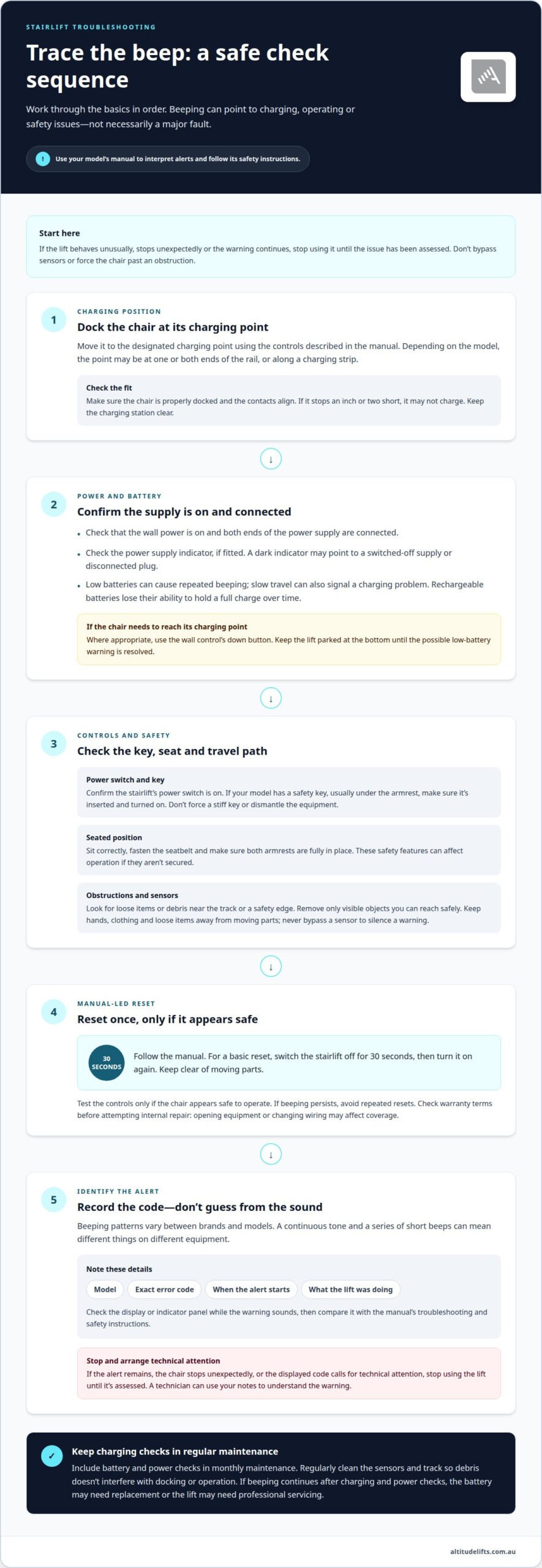
When troubleshooting stairlift beeping, start at the charging point, then check the battery and power supply. If the lift can’t charge, its battery may run low and trigger an alert.
-
Check the charging position
Move the stairlift to its designated charging point, using the controls as described in its manual. Depending on the model, charging points may sit at one or both ends of the rail, or along a charging strip. Check that the chair is properly docked and the contacts align. If it stops an inch or two inches short, it may not charge.
-
Assess battery charging and depletion
Check that the wall power is on and both ends of the power supply are connected. Low batteries can cause repeated beeping, and slow travel can also signal a charging problem. If the lift is at the bottom and needs to reach its charging point, use the wall control’s down button where appropriate. Keep it parked at the bottom until the possible low-battery warning is resolved.
- Check the power supply indicator, if fitted, and look for anything preventing the chair from docking. A disconnected supply or misaligned charging station can leave the batteries without charge. If the lift is switched off or regularly misses its charging position, its batteries may run down sooner and need replacing sooner. Rechargeable batteries also lose their ability to hold a full charge over time. Follow the stairlift manual for charging instructions and battery information.
Include battery and power checks in monthly maintenance. Keep the charging station clear, and regularly clean the sensors and track so debris doesn’t interfere with docking or operation. If beeping continues after power and charging points are checked, the battery may need replacement or the lift may need professional servicing. For troubleshooting stairlift beeping that persists, use the manual’s error codes to identify the warning rather than relying on the sound alone.
Checking stairlift power switches and key
To reset a beeping stairlift safely, follow its manual and switch it off for 30 seconds before turning it back on. Keep clear of moving parts, and stop if the alert continues or the lift behaves unusually.
- Check the power connection first. Confirm the stairlift is plugged into the wall and its power switch is on. Look for an LED on the power supply, if fitted; it can indicate whether charging is occurring correctly. A dark indicator may point to a switched-off supply or disconnected plug, rather than an immediate need for repair or battery replacement.
- Check the safety key, usually located under the armrest. If your model has one, make sure it’s inserted and turned on. A disabled key can trigger beeping and prevent operation. Don’t force a stiff key or dismantle the equipment. Use the owner’s manual for the correct position and any model-specific reset instructions.
- Before using the controls, sit correctly and check that the seatbelt is fastened and both armrests are fully in place. These safety features can affect operation if they aren’t secured. Keep hands, clothing and loose items away from moving parts, and don’t bypass a sensor to silence a warning.
- If the basic checks are complete, use the manual’s reset process. For a basic reset, switch the stairlift off for 30 seconds, then turn it on again. Test the controls only if the chair appears safe to operate. If beeping persists, note any error codes and avoid repeated resets; arrange technical attention. Check warranty terms before attempting internal repair, as opening equipment or changing wiring may affect coverage.
If recurring faults make you reconsider your home’s mobility setup, explore residential stairlift options.
Understanding manufacturer-specific error codes
Beeping patterns don’t have the same meaning across all stairlift brands. Check your model’s manual for the specific tone or error code before deciding what it signals.
-
Look for diagnostic error codes
Check the display or indicator panel while the warning sounds, and record any displayed error code. Note when the beeping starts, such as after switching on or during travel. Diagnostic codes may appear with audible alerts when a lift detects a problem, but their meanings depend on the manufacturer and model.
-
Interpret the beeping patterns
Compare the tone’s timing and any display message with the manual’s troubleshooting and safety instructions. A continuous tone and a series of short beeps can indicate different issues on different equipment, so don’t assume either points to a particular fault. The manual is also the reference for model-specific actions involving a swivel seat or controls.
- Keep your notes together: the stairlift model, exact error code, when the alert occurs and what the lift was doing. This gives a technician useful context if the manual doesn’t explain how to resolve the issue. Avoid repeated resets or installing parts based on a guessed code; incorrect changes can create further faults.
Use only the checks and actions described in the manufacturer’s manual for your model. If the alert remains, the chair stops unexpectedly or the displayed code calls for technical attention, stop using the lift until it’s assessed. A clear record of the warning helps identify the next step without treating every beep as a failure. Since a stairlift supports daily independence, understanding its signals helps you respond calmly and appropriately.
Common causes of repeated stairlift beeping
If the stairlift still works while beeping, check its sensors and seat position, and note what happens during travel. Does the sound stop when movement or seat adjustment ends?
- Inspect the track for an obstruction, such as a loose item or debris near a safety edge. Stairlift sensors can detect something blocking the track and trigger a warning, even if the chair can still move. Remove only visible objects you can reach safely; don’t force the lift past an obstruction.
- Check whether the beeping occurs during movement or seat rotation. Some lifts sound a normal alert as the rider reaches the end of the rail to enter or exit. Beeping during travel or rotation typically stops when the movement ends or the seat returns to its ride position.
- Return a rotated seat to its riding position before trying to travel. A seat turned 90 degrees must be in the ride position for the lift to move. Also check that the seatbelt is fastened and armrests are fully in place, as an unsecured position can prevent normal operation.
- Look for dirt around the sensors and along the track, then clean them as directed in the manual. A dirty or malfunctioning sensor can trigger repeated beeping. If the alert continues or the track appears misaligned, stop using the lift and arrange a technician’s assessment rather than attempting an adjustment.
- Record when the warning starts, such as during travel, at a landing or while swivelling the seat. This pattern helps identify whether the alert relates to an obstruction, a safety feature or normal operation. A stairlift that sounds unusually noisy while moving also needs technical attention.
For help choosing a mobility solution suited to your home’s accessibility needs, explore stairlift options.
Altitude Lifts: Alpha Stairlift
If repeated alerts have you reassessing your home’s mobility needs, Altitude Lifts offers the Alpha Stairlift as a residential stairlift option in Western Australia. The Swift Home Lift Lite, Swift Lift Pro and Compact Elegance Home Lift are other options for vertical mobility. The right choice depends on your home layout and how you need to move between levels. These options aren’t a substitute for investigating a fault with an existing lift: follow its model-specific manual and arrange technical attention for unresolved alerts.
To discuss whether the Alpha Stairlift suits your home, contact Altitude Lifts.
Keep your next step clear
A calm, consistent approach to troubleshooting stairlift beeping can help you decide what to do next. If the alert returns, don’t treat each beep as an isolated annoyance. Consider whether the lift is dependable for your everyday routine and whether the underlying issue has been resolved, not simply silenced.
If you’re considering a different mobility solution for your home, Altitude Lifts offers the Swift Home Lift Lite, Swift Lift Pro and Compact Elegance Home Lift in Western Australia. The right option depends on your home and how you need to move between levels. You can discuss what may suit your circumstances without rushing into a decision.
Contact Altitude Lifts for help with your next step. A thoughtful decision can make everyday movement at home feel more manageable.
Frequently Asked Questions
Bonus Tips – How Do I Stop My Stairlift from Beeping?
First identify when the sound starts, rather than trying to silence it. Note whether it begins while the chair is idle, moving or being positioned for entry, then compare that behaviour with the model’s manual. Don’t disable an alert or keep operating the stairlift if it moves unpredictably. A short record of the sound and circumstances can make a technical assessment more useful.
Is Your Stairlift’s Beep Normal?
A brief beep during an expected action can be a normal status update, such as reaching a rail endpoint. Check whether the sound stops when that action ends. A continuing alert while the chair is parked, or a beep paired with unusual movement, needs attention. Check the manual’s description for your model instead of judging the sound by its volume alone.
What Should I Do if My Stairlift Needs Servicing?
Arrange servicing if an alert persists, operation changes or the lift becomes noisier than usual. Altitude Lifts recommends annual servicing for its lifts and sends a reminder on the installation anniversary. Keep a note of alerts or changes in operation to discuss during servicing. If the stairlift stops unexpectedly, don’t rely on repeated resets instead of an assessment.
Which Stairlift Problems Can I Fix Myself?
You can address simple, visible issues described in your manual, such as moving a loose object away from the accessible track area or securing an unfastened seatbelt. Use only the controls and cleaning steps specified for your model. Don’t open covers, alter wiring or adjust the rail. These tasks involve internal equipment and should be left for technical assessment.
Why won’t my stairlift move?
A stairlift may not travel if its seat isn’t in the riding position, a safety edge detects an obstruction or a safety feature isn’t engaged. Check for an item blocking the chair’s path and confirm the seat is correctly positioned before trying the control again. If it remains stationary, don’t push or force it along the rail. Consult the manual for the model-specific warning.
How to stop a stairlift from beeping when parked or not in use?
Check whether the parked chair is in the position required by its manual and whether an alert signals a charging or operating issue. Don’t switch off or unplug the stairlift just to silence a persistent warning, as that may prevent normal charging. If it keeps beeping while idle, record the displayed message or sound pattern and arrange an assessment.